News & Articles
The Dangerous Goods Code and AS1940: A Practical Guide to Your Obligations
Flammable and combustible liquids are essential to many workplaces, from fuels and solvents to paints, cleaning agents and alcohol‑based products. But when stored incorrectly, these liquids present serious fire, explosion and environmental risks.
That’s why AS1940: The Storage and Handling of Flammable and Combustible Liquids, exists.
At over 180 pages, the Standard is detailed and technical. This article provides a practical, high‑level overview of what businesses and site managers need to understand about AS1940, particularly when using packaged storage, cabinets, and detached dangerous goods stores.
This article is a general overview only and does not replace the need to read and understand AS1940 in full.
What are Dangerous Goods?
Dangerous Goods are liquids, powders or mixtures that have explosive, flammable, corrosive, infectious or toxic properties. They are called such as they represent an immediate risk to people, property or the environment if handled incorrectly.
These can take the form of petrol, acids, gases, or even lithium batteries, and must be handled, packaged and/or transported in accordance with relevant regulations to minimise their potential risk.
Are there different types of Dangerous Goods?
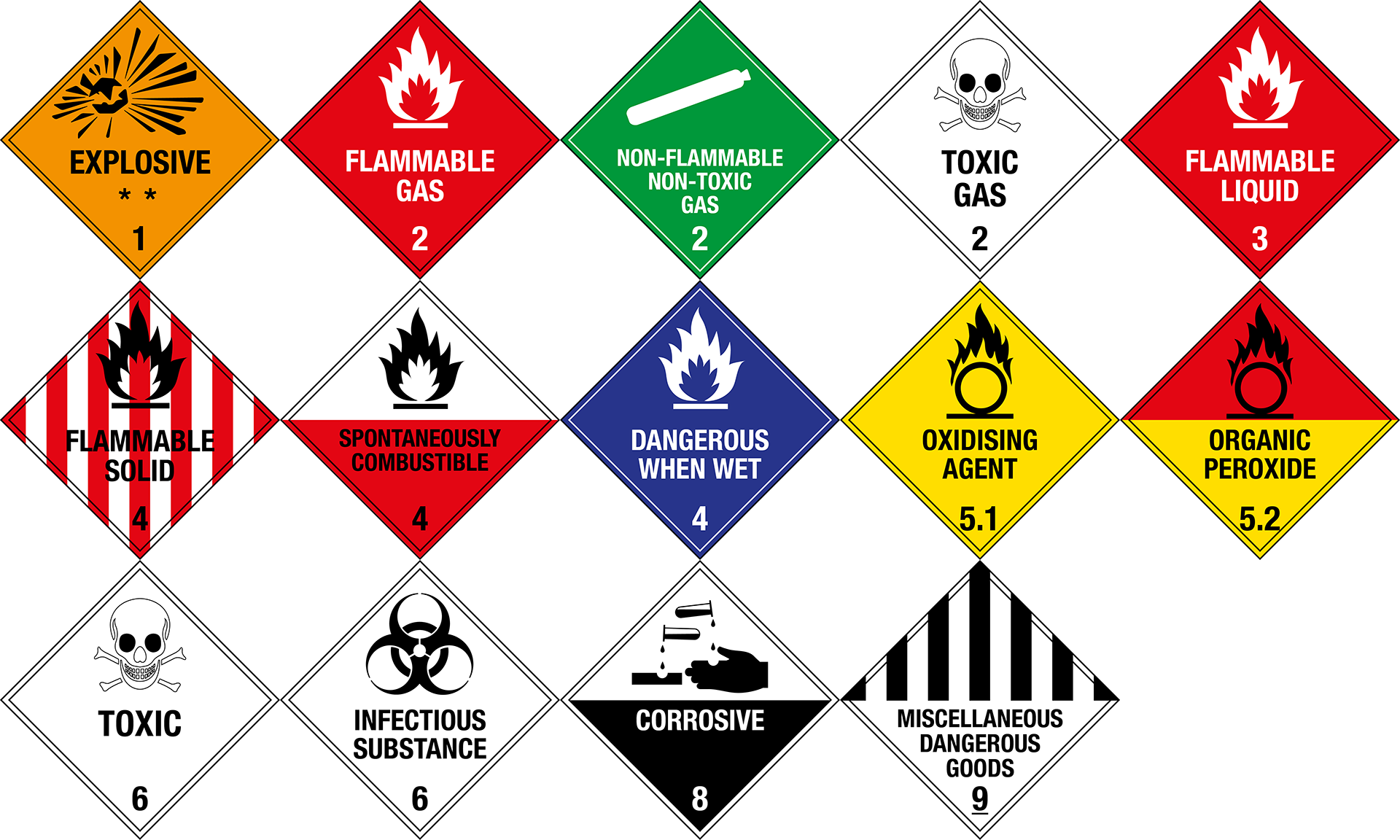
Under the Australian Dangerous Goods (ADG) Code, there are 9 main classes of Dangerous Goods.
- Class 1: Explosives
- Class 2: Gases
- Class 3: Flammable liquids
- Class 4: Flammable solids
- Class 5: Oxidising Substances and Organic Peroxides
- Class 6: Toxic and Infectious Substances
- Class 7: Radioactive Materials
- Class 8: Corrosives
- Class 9: Miscellaneous Dangerous Goods (lithium batteries, dry ice)
Classes of Dangerous Goods. Source: Worsafe WA
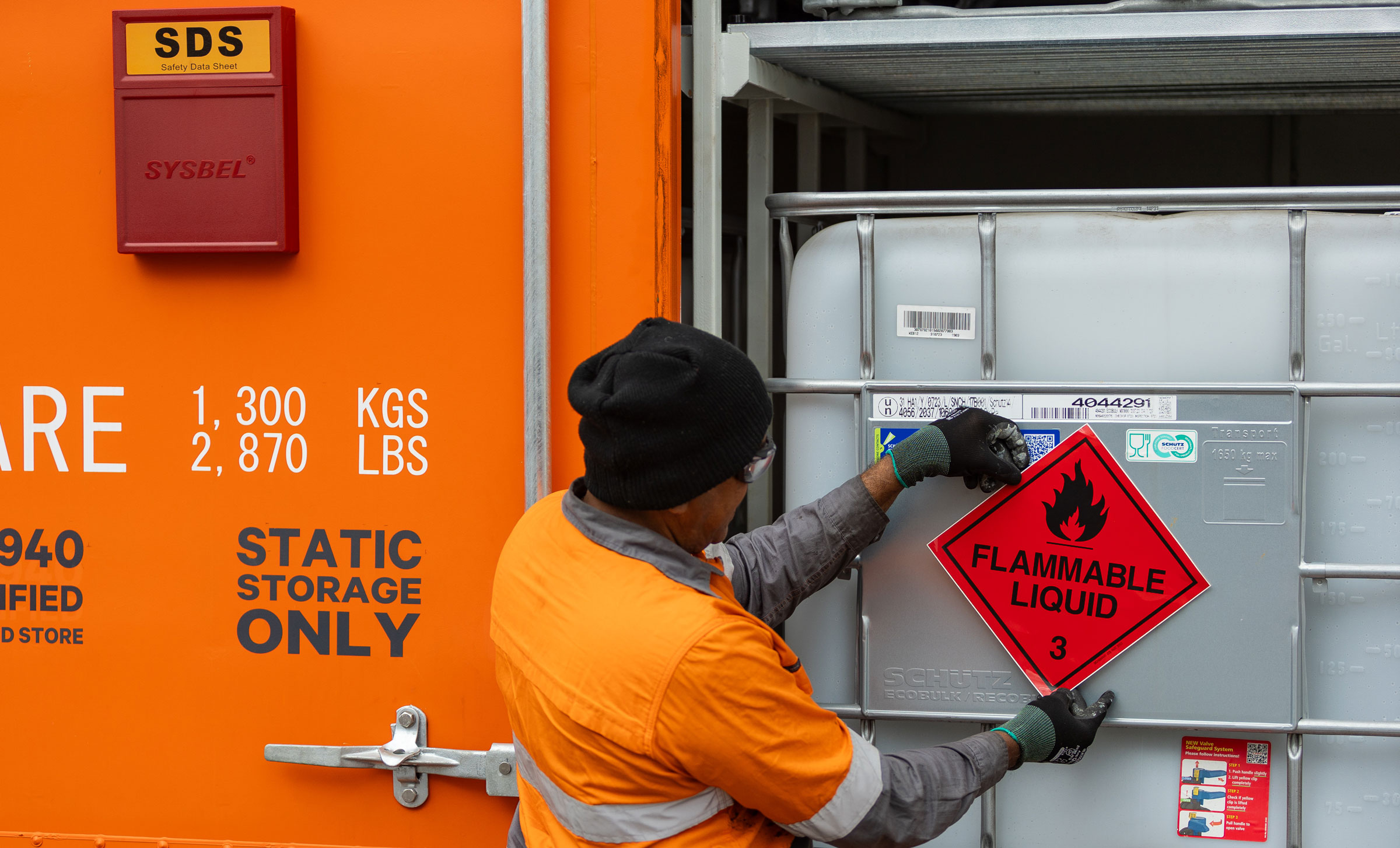
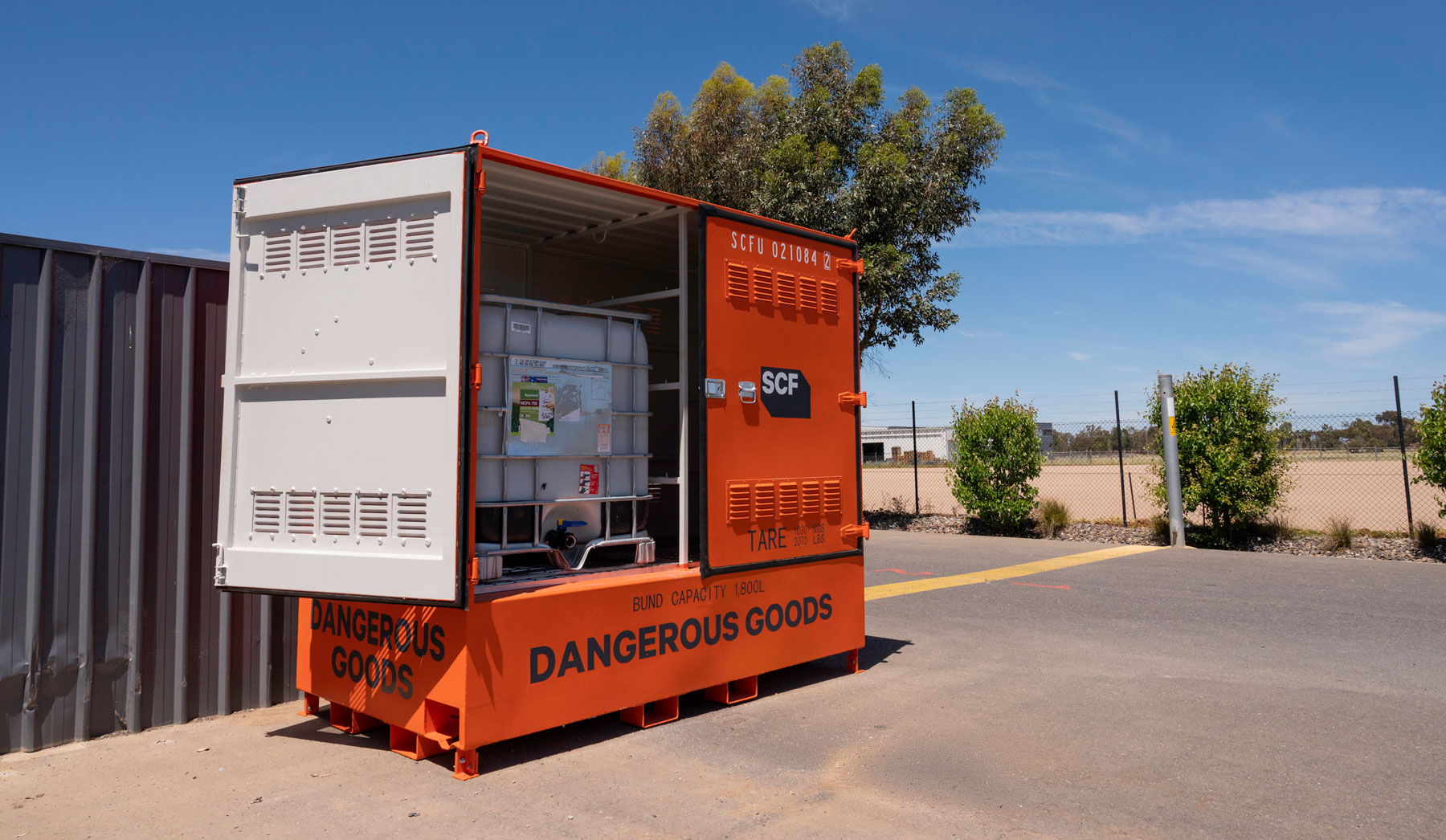
SCF’s Dangerous Goods Containers provide flexible storage for chemical classes 3, 4.1, 4.3, 5.1, 6.1 and 8 (subject to MSDS compliance).
Read more about the Australian Dangerous Goods Code
What is AS1940?
AS1940 sets out the requirements for the storage and handling of Class 3 flammable liquids and combustible liquids. It applies to workplaces where these liquids are stored or handled and focuses on preventing fire, explosion, environmental harm and injury.
The transport of dangerous goods is regulated separately under the Australian Dangerous Goods (ADG) Code.
While AS1940 applies nationally, it must also be read alongside relevant state and territory WHS regulations.
-
South Australia - Dangerous Goods Substances Act 1979. Safework SA manages licensing for storage and transport
-
Victoria - Dangerous Goods Act 1985 and the Dangerous Goods (Storage and Handling) Regulations 2022. Managed by Worksafe Victoria
-
New South Wales - Work Health and Safety Regulation 2025 (referring to them as ‘hazardous chemicals’) and the Dangerous Goods (Road and Rail Transport ) Regulation 2022. Managed by Safework NSW
-
Queensland - Work Health and Safety Act 2011. Managed by Worksafe Queensland
-
Northern Territory - Dangerous Goods Act 1998 and Regulations 1985 (for explosives/fuel gas) and the Work Health and Safety (National Uniform Legislation) Act 2011. Managed by NT Worksafe
-
Western Australia - Dangerous Goods Safety Act 2004. Managed by Worksafe WA
-
Tasmania - WHS Act 2012 and Dangerous Goods (Road and Rail Transport) Regulations 2021. Managed by Worksafe Tasmania
Understand Your AS1940 Responsibilities
It is important to understand your responsibilities in storing Class 3 chemicals on your premises. The key considerations are listed below, which act as a guide only, and AS1940: The Storage and Handling of Flammable and Combustible Liquids should be read in full to confirm you meet all obligations.
Determine Whether You Are Minor Storage - Step 1
One of the first key classification steps under AS1940 is determining whether your site falls within ‘minor storage’ quantities. The Standard provides tables that define minor storage limits based on whether liquids are stored indoors or outdoors, the type of liquid, and the nature of the occupancy.
Minor storage allows reduced requirements in some areas, but it is not an exemption from safety obligations. Controls around ignition sources, spill management, safe handling and security still apply.
Location and Separation Distances - Step 2
Where storage quantities exceed minor storage thresholds, separation distances become critical. AS1940 specifies minimum distances between storage areas and property boundaries, protected places, on‑site buildings and ignition sources. These distances increase as stored quantities increase.
Where separation distances cannot be achieved, fire‑resisting construction may be required. For detached stores, separation distance compliance is often a key design consideration.
Spill Containment (Bunding) - Step 3
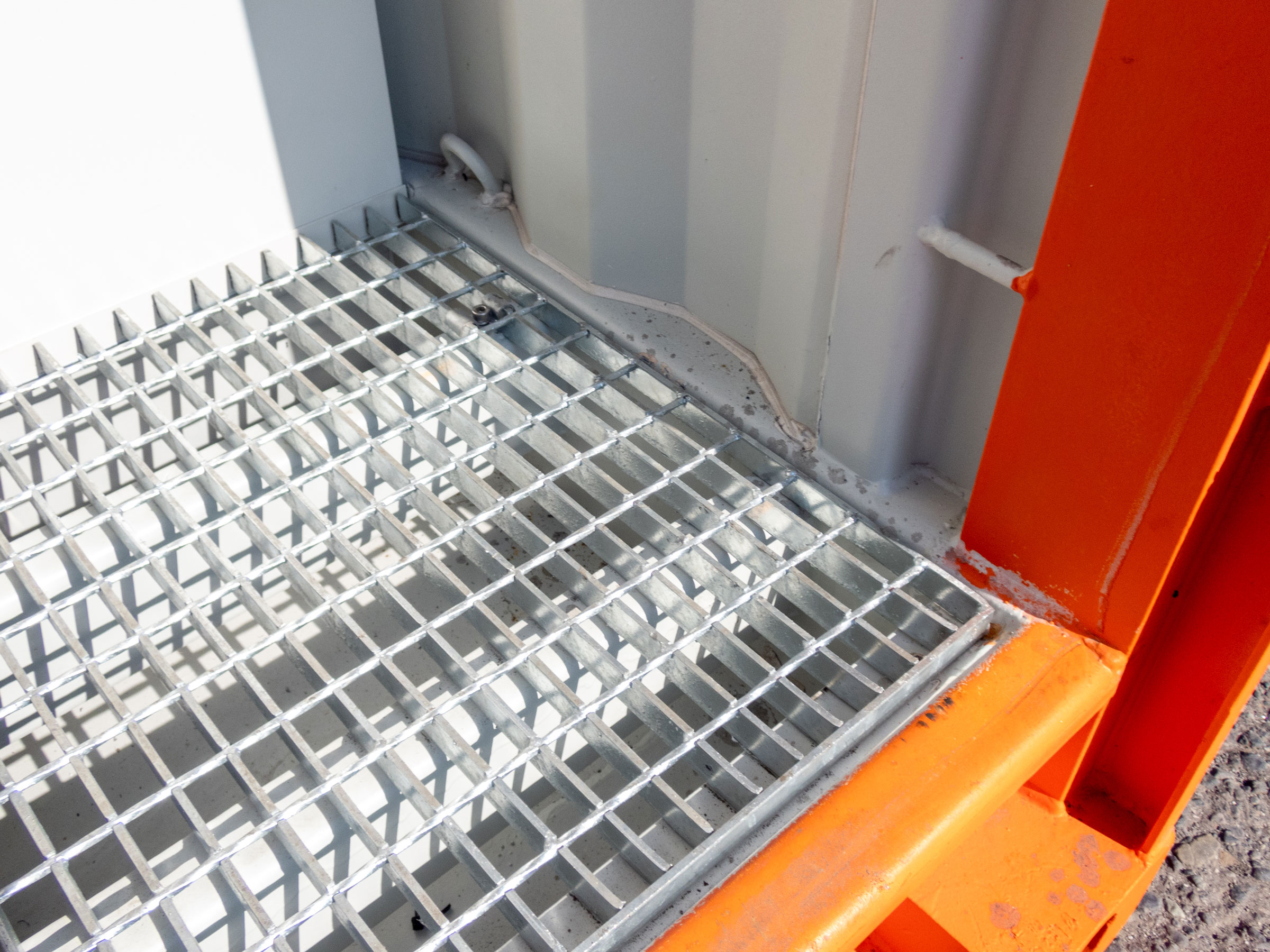
Package storage areas must provide spill containment to prevent liquids escaping into the environment. As a general principle, bund capacity must be sufficient to contain either the largest single package or a proportion of the total stored volume, whichever is greater.
Spill containment must prevent discharge to stormwater, sewer systems, soil or waterways.
Businesses must also have procedures in place for spill response and waste disposal.
Ventilation Requirements - Step 4
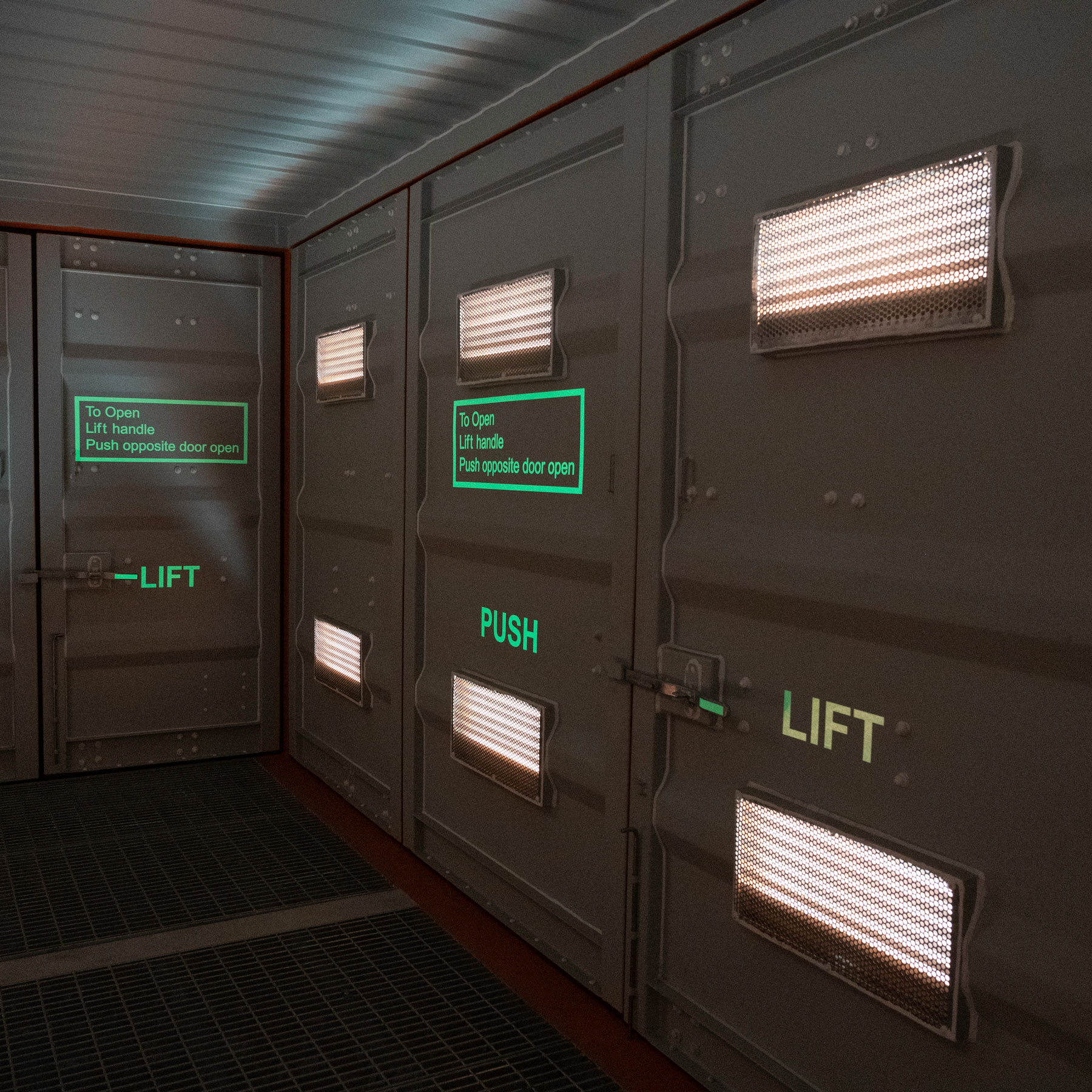
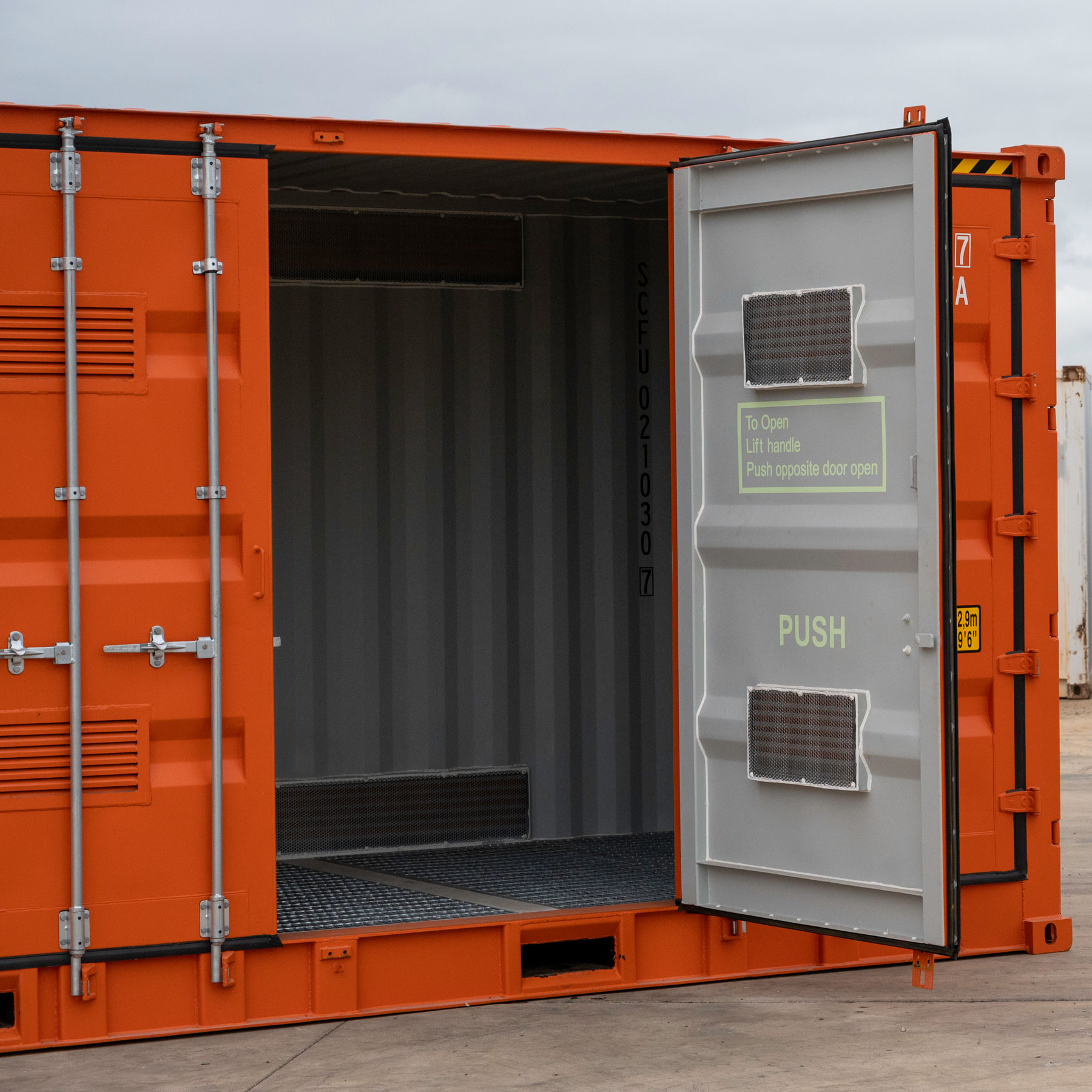
Ventilation is required to prevent the build‑up of flammable vapours and reduce explosion risk. Ventilation may be natural or mechanical, but it must achieve the performance intent of the Standard. Simply installing vents is not sufficient and ventilation design must consider vapour density, airflow paths and personnel exposure limits.
Ventilation as seen from the inside of an SCF Dangerous Goods container
Ventilation as seen from the outside of an SCF Dangerous Goods container
Ignition Source Control - Step 5
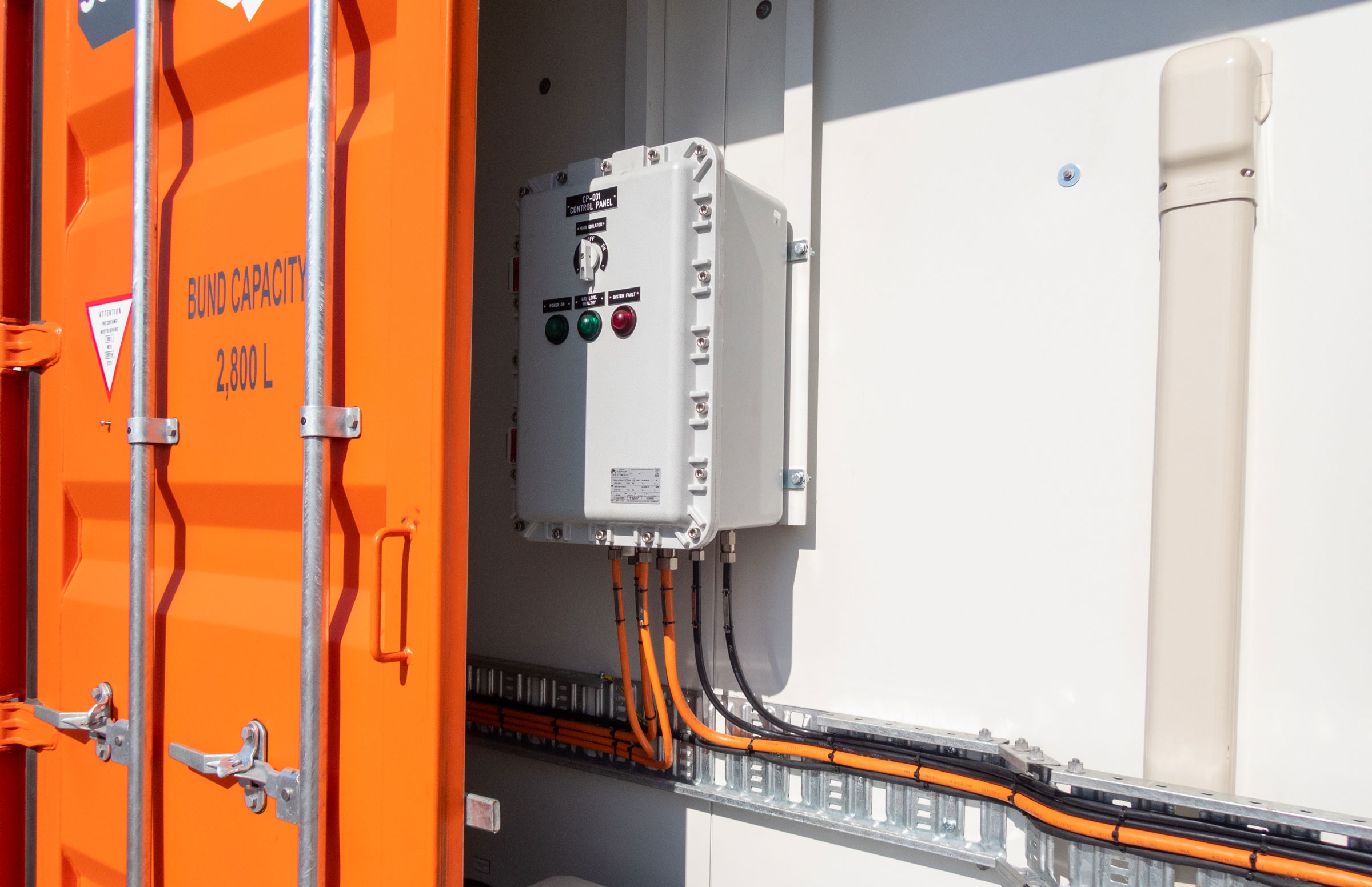
AS1940 requires strict control of ignition sources in and around storage areas. This includes management of electrical equipment, static electricity, hot work activities and incompatible operations.
Where vapour risks exist, electrical installations may need to comply with hazardous area requirements.
Detached Stores and Freight Containers - Step 6
Standard freight containers are not automatically suitable for flammable liquid storage. Where containers or detached stores are used, they must meet AS1940 requirements relating to ventilation, spill containment, structural integrity, access and separation distances.
Compliance depends on how and where the store is installed, the quantities stored and how the site is managed, not on the product alone.
Independent Compliance Assessment
SCF’s Dangerous Goods Storage Containers have been independently assessed as compliant with the requirements for detached stores under AS1940, based on their design, construction, ventilation, spill containment and access provisions.
This assessment has been provided by the Chair of the AS1940 Standards Committee, acting in an independent technical capacity.
Assessment relates to the storage unit design only. Compliance with AS1940 remains subject to site‑specific factors including installation, location, quantities stored, separation distances, operational controls and emergency management.
SCF's Dangerous Goods Containers
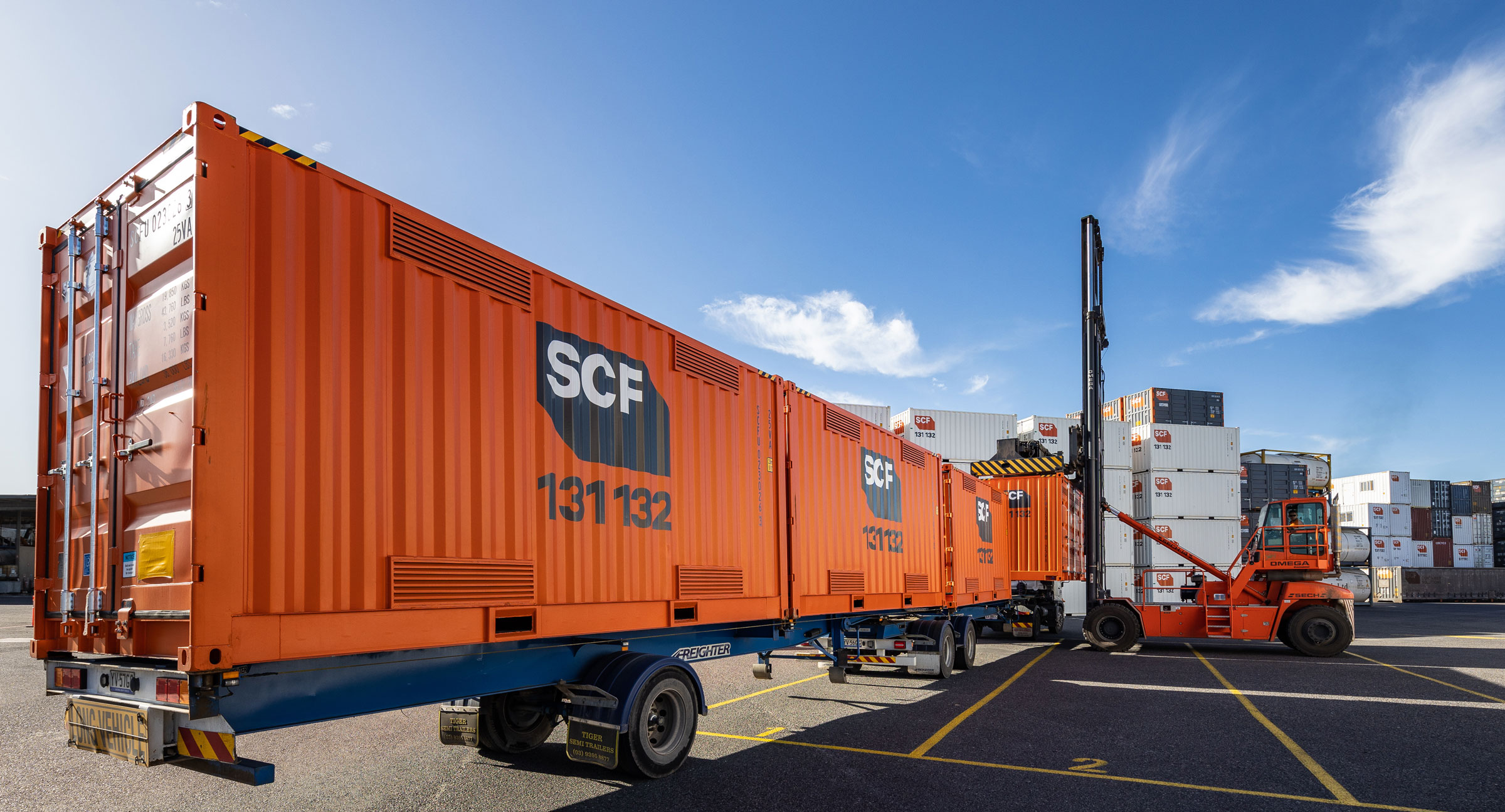
SCF has been at the forefront of Dangerous Goods Containers for over 15 years. It has designed and produced a range of safety and operational features that have become industry standard across containers and cabinets. This constant focus on safety and innovation is what separates SCF Dangerous Goods Containers from others available on the market.
10ft Dangerous Goods
20ft Dangerous Goods Double Side Door
20ft Intrinsic Dangerous Goods Container
Storage Cabinets - Step 7
Storage cabinets are commonly used for smaller volumes of flammable liquids. Cabinet design requirements include fire‑resistant construction, liquid‑tight sumps, self‑closing doors and appropriate ventilation. Maximum storage capacities and design requirements vary depending on cabinet type and installation and must be assessed against AS1940 criteria.
Dangerous Goods Cabinets for Smaller Requirements
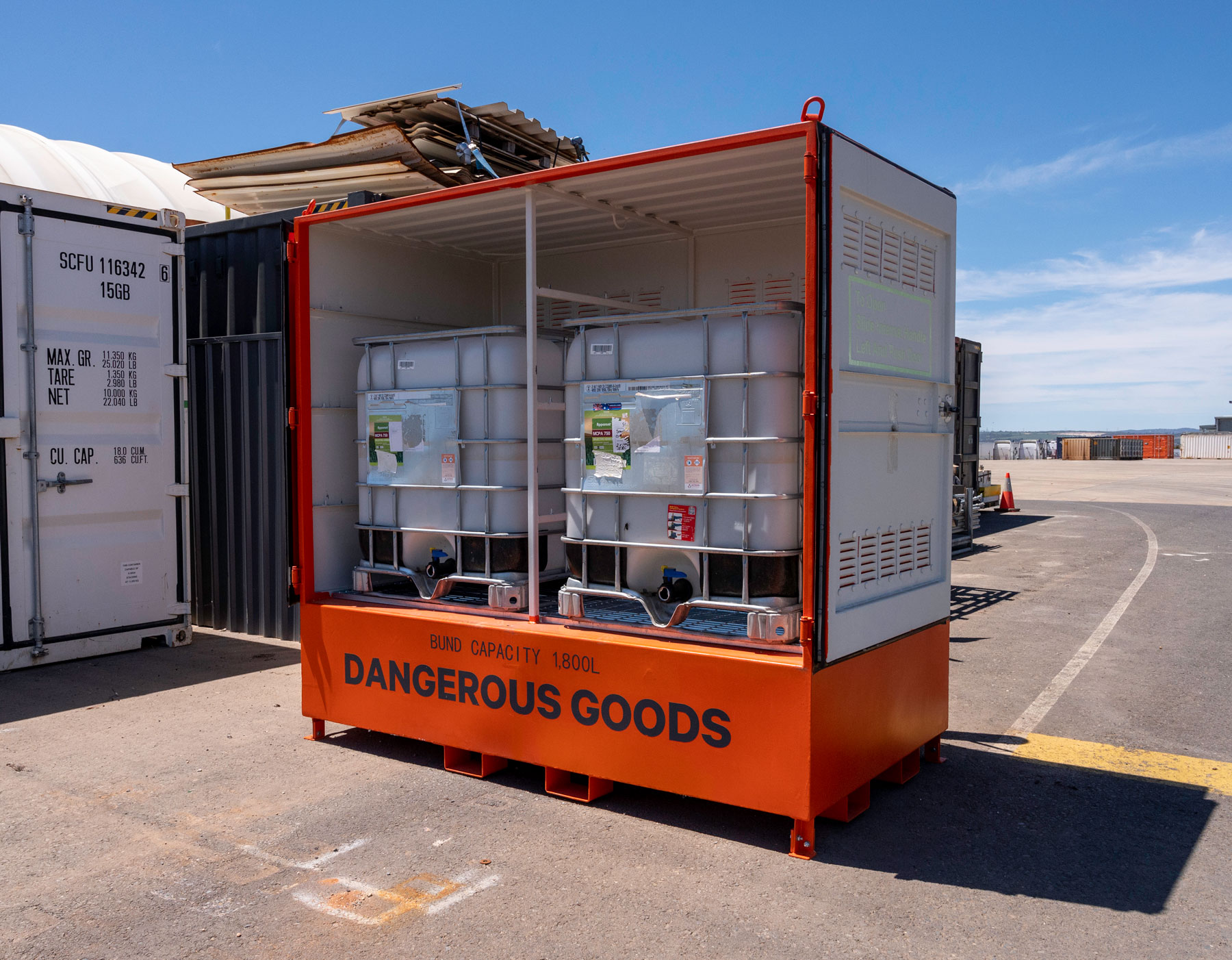
SCF's range of certified Dangerous Goods cabinets provide a solution for smaller requirements on your site. From store rooms with internal access and shelving, to even smaller 2 pallet/IBC wide cabinets that can easily be accessed by individuals or forklifts, SCF has various sizes available. They are all built with the same standards and features found in the original 10ft and 20ft Dangerous Goods Containers.
Chemical Storage Cabinet
Dangerous Goods Store
Chemical Storage Cabinet 4 IBC
Chemical Storage Cabinet 1 Pallet Wide
Emergency Planning and Fire Protection - Step 8
Beyond physical storage, AS1940 places importance on emergency planning, fire protection, signage, training and operational controls. These measures must be appropriate to the nature and quantity of liquids stored and form a critical part of overall compliance.
Final Thoughts
AS1940 exists to reduce the risk of fire, explosion, environmental harm and injury when storing flammable and combustible liquids.
Understanding your obligations starts with assessing storage quantities, confirming separation distances, ensuring adequate bunding and ventilation, controlling ignition sources and implementing effective emergency procedures.
Purpose‑built storage solutions can support compliance, but every site must be assessed as a whole against the Standard to ensure compliance can be achieved/met.
Still have questions?
Our Team of Dangerous Goods specialists have worked with customers across a wide range of industries over many years. Whilst they cannot assess your site, they can connect you with all the information you need to make the right decision in regards to your Dangerous Goods Storage. This includes recommending the right products for your required storage volumes, to relevant authorities and industry figures should you wish to discuss.
Speak to Someone Who Knows Dangerous Goods
Prefer to speak to someone? Call 131 132
We get it, sometimes it is easier to speak directly with a human who knows what they're talking about. Give us a call on 131 132 if you prefer, and select 2 on the menu to speak to a Dangerous Goods team member.
Subscribe & stay informed
Receive the latest in products, trends, news, events and tips.