

20ft Ensuite Block
Keep your hard working team feeling so fresh and so clean with our 20ft Ensuite Block. Whether your site is big or small, SCF's 20ft Ensuite Block is your all in one big impact hygiene solution.
Learn more
Mining has been central to Australia's survival and growth as a nation. Whilst everyone has some awareness of mining, what is actually needed to run a successful project with minimal delays and subsequent cost blow outs that can cripple the feasibility of a mine? It might come as a surprise that the modular nature and ability to deploy containers in a matter of days makes them a common feature of mining projects across the country, on both smaller and larger scale sites.
Australia has a strong relationship with mining that dates all the way back to pre European settlement. Aboriginals had mined ochre at the Wilgie Mia site in the Weld Range of Western Australia that dates back between 27,000-40,000 years ago.
Following European settlement, colonial coal mines were established by convicts at Nobbys Head near Newcastle in the late 1700s. The first coal shipment left the colony in 1799, representing Australia’s first commodity export1.
Since then, the country has mined a wide range of minerals:
The first official economic metal mining (silver and lead) began in South Australia, in 1841.
The first copper boom also began in South Australia, in 1842.
Gold was discovered across New South Wales and Victoria. The famous ‘Gold Rushes’ occurred in the mid to late 1800s.
The resources boom that included uranium, bauxite, manganese and nickel started in the 1950s across Western Australia and Queensland.

An early depiction of a temporary settlement common during the gold rushes, with tents, mining pits and shops to service the workers. Gold Diggings - By Edward Roper, c 1858. Source: State Library of New South Wales DG 15, Public Domain
Whilst Australia still continues to mine much of these materials, the process to do it and the scale of these projects operate at has changed significantly. The first coal mining in Australia was done by hand with picks and shovels, hand loaded into small baskets or wooden carts, and then manually carried, dragged or shifted with the assistance of animals to be loaded onto a boat and shipped in a rudimentary manner. Now mines are heavily automated, with a wide range of significant infrastructure and oversized machines to shift and process large volumes of matter.
In 2026, the mining landscape in Australia is defined by rapid exploration and the expansion of Tier 1 assets, which are concentrated primarily in the iron ore hubs of Western Australia and the copper-gold districts of the eastern states.
Australia is recognised as a global powerhouse for the production and export of natural gas, and the mining of iron ore, gold and ‘critical minerals’ that are becoming essential for the energy transition; copper, lithium, nickel, cobalt and rare earths (elements like Neodymium and Praseodymium).
The below breaks down the operating mines in Australia by commodity type2.
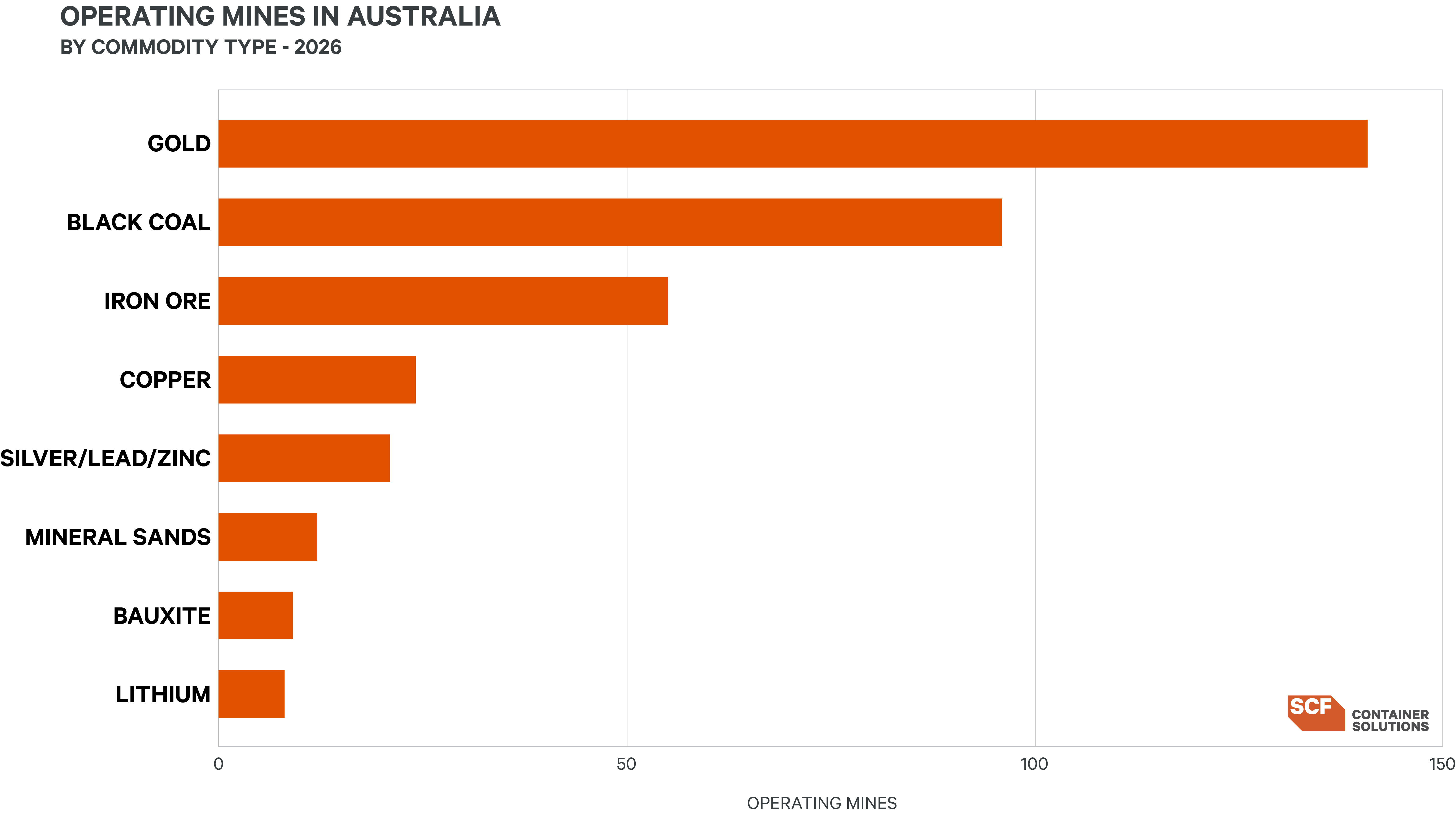
Active Australian Mines by Commodity Type - 2026. Source: International Institute for Sustainable Development - IISD
Setting up a modern mine site requires a highly coordinated deployment of modular, scalable infrastructure. From massive Tier 1 iron ore operation in the Pilbara to a mobile lithium exploration camp in the Northern Territory, mining environments are characteristically remote and ecologically sensitive.
With Australia’s strict regulations and standards, and the significant investment that is required to get each site operational, it is critical to achieve rapid site mobilization without the long lead times of permanent civil works, while ensuring total safety and regulatory compliance.
Standard 10ft, 20ft or 40ft shipping container dimensions allow for rapid deployment to off-grid locations, such as the Pilbara or Goldfields, and enable the required "separation distances" from site offices and accommodation camps to be maintained without building permanent structures.
The core infrastructure required to transition a site from a barren plot to a smooth, ongoing operation is divided into five key pillars.
Pneumatic Infrastructure is critical for storing and rapidly discharging the dry materials (like cement and lime) used in underground paste fill operations to maintain structural integrity.
Throughout the build phase and ongoing operation at a mine site, storage is required to safely house materials, equipment and inputs and protect them from the harsh elements, such as searing hot days, dust storms and rain (at times torrential).
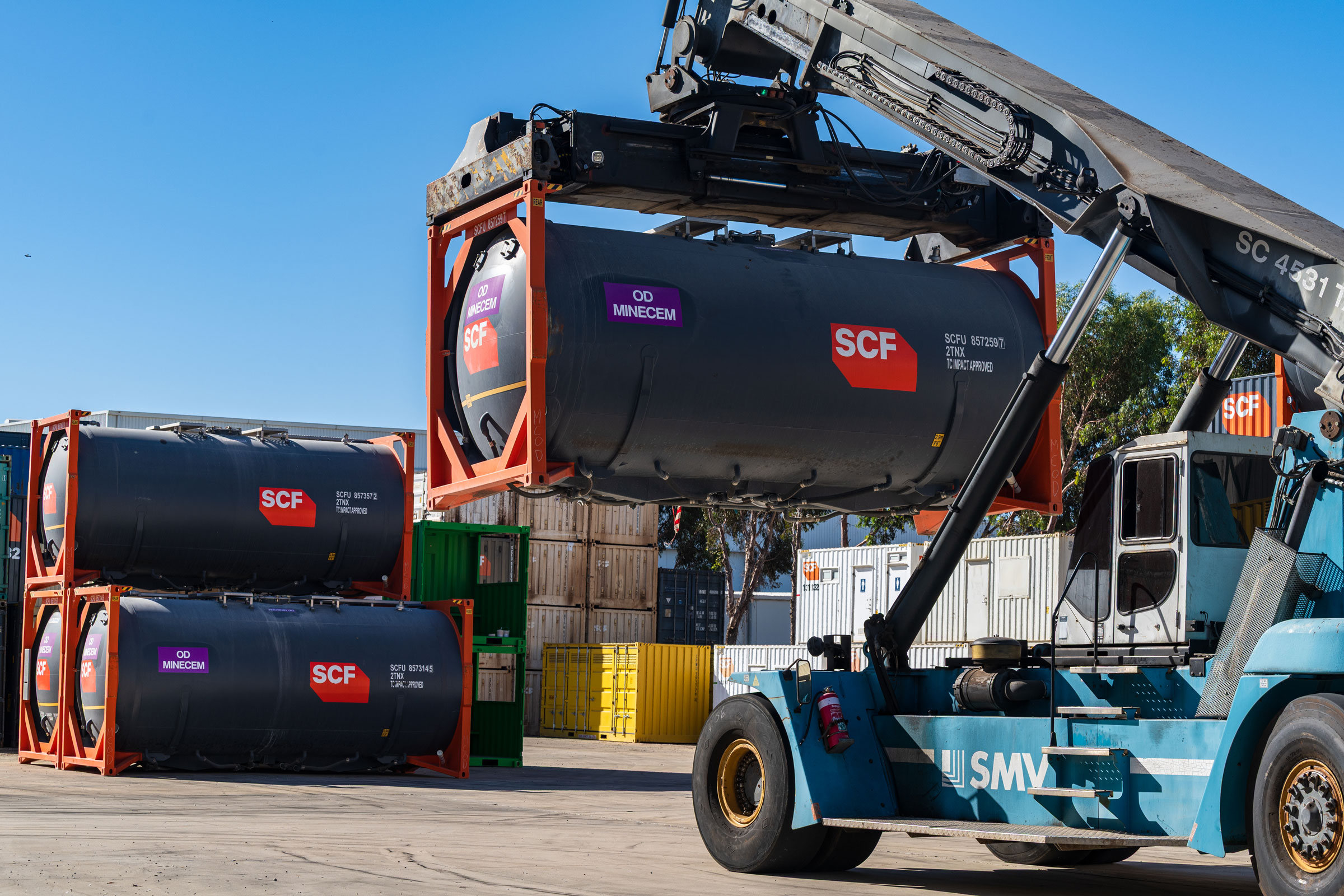
SCF cement tanks, able to transport bulk cement powder for mining sites.
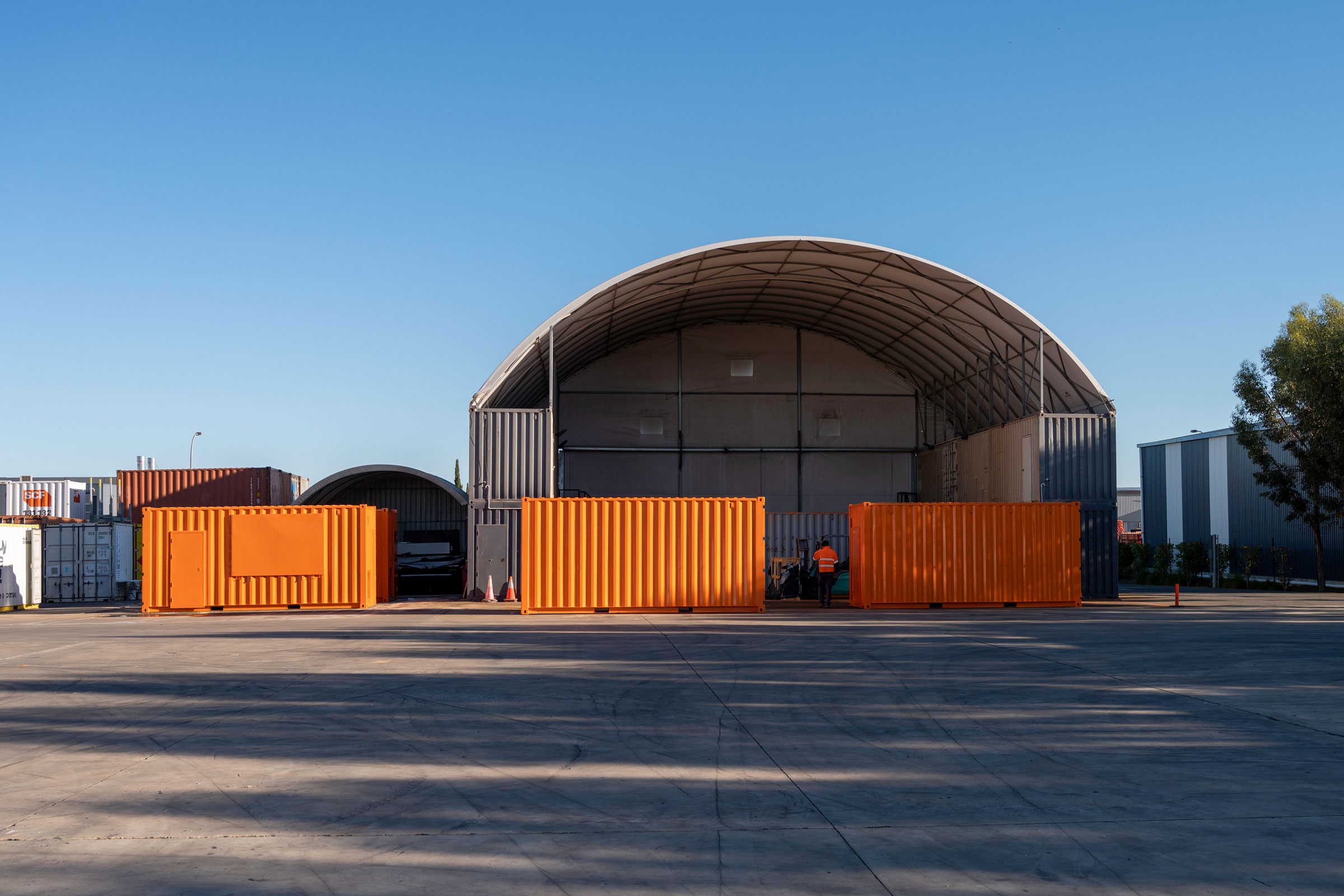
SCF Containers in depot ready to be deployed to a remote mining site.
A smooth operation relies entirely on the safety, health, and comfort of its workforce. Containerized Site Sheds provide a modular ‘plug-and-play’ solution to establish a fully functional camp within days.
Crib Rooms and Lunch Rooms: Insulated, climate-controlled spaces equipped with kitchenettes to allow crews to rest and refuel.
Ablution and Shower Blocks: Dedicated, private sanitary facilities that maintain strict on-site hygiene standards.
First Aid and Clinical Spaces: Fully equipped, portable medical buildings to treat injuries immediately on-site, which is crucial when permanent hospitals are hundreds of kilometers away.
Operational Command: 20ft and 40ft Site Offices serve as the administrative and engineering hubs for daily project management.

SCF’s range of site sheds provides a rapid-response solution for remote Australian mining camps, offering a comprehensive suite of "plug-and-play" amenities that can be deployed as easily as standard shipping containers.
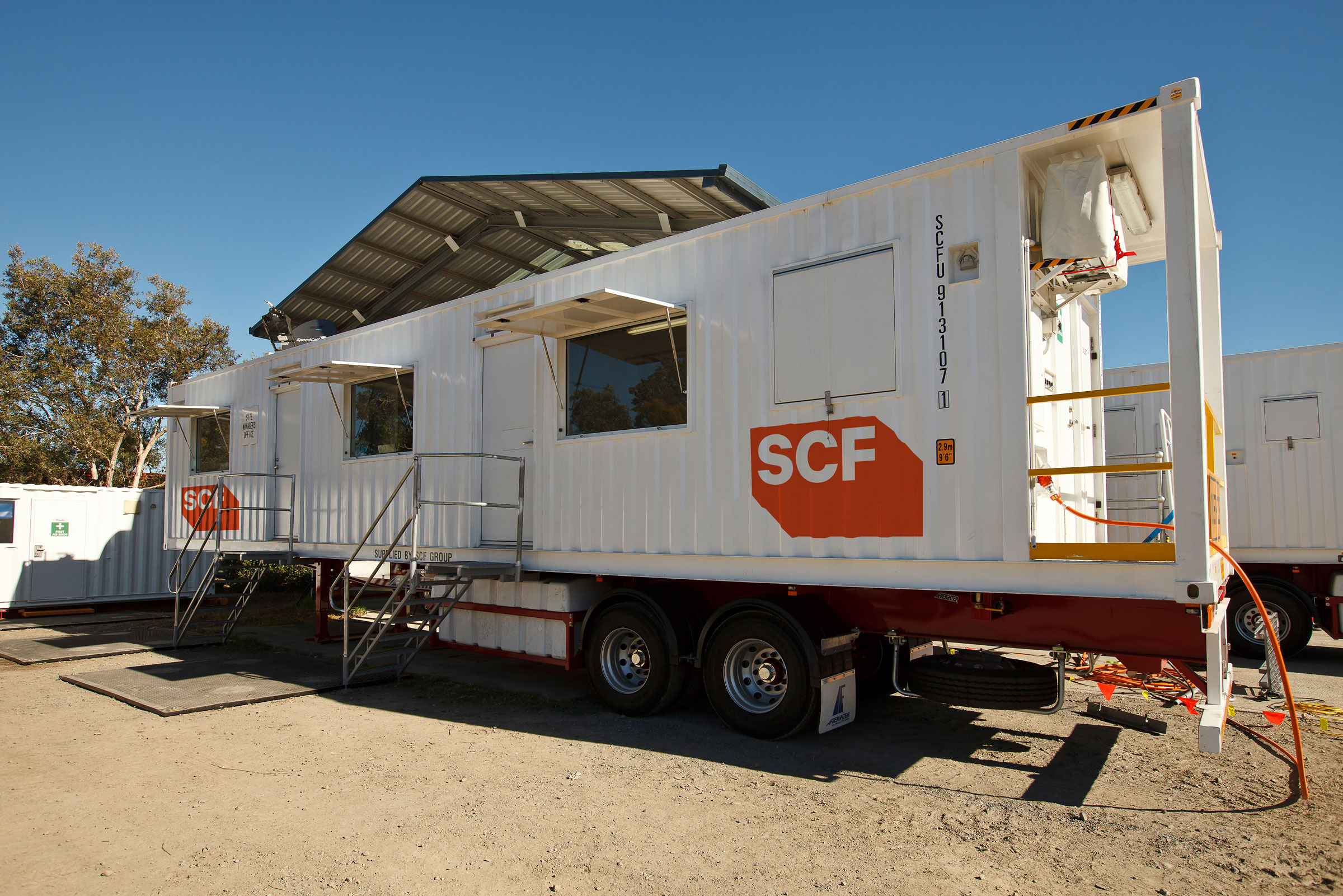
SCF Trailerised camp with stairs in place. Quick and easy to deploy to remote sites.
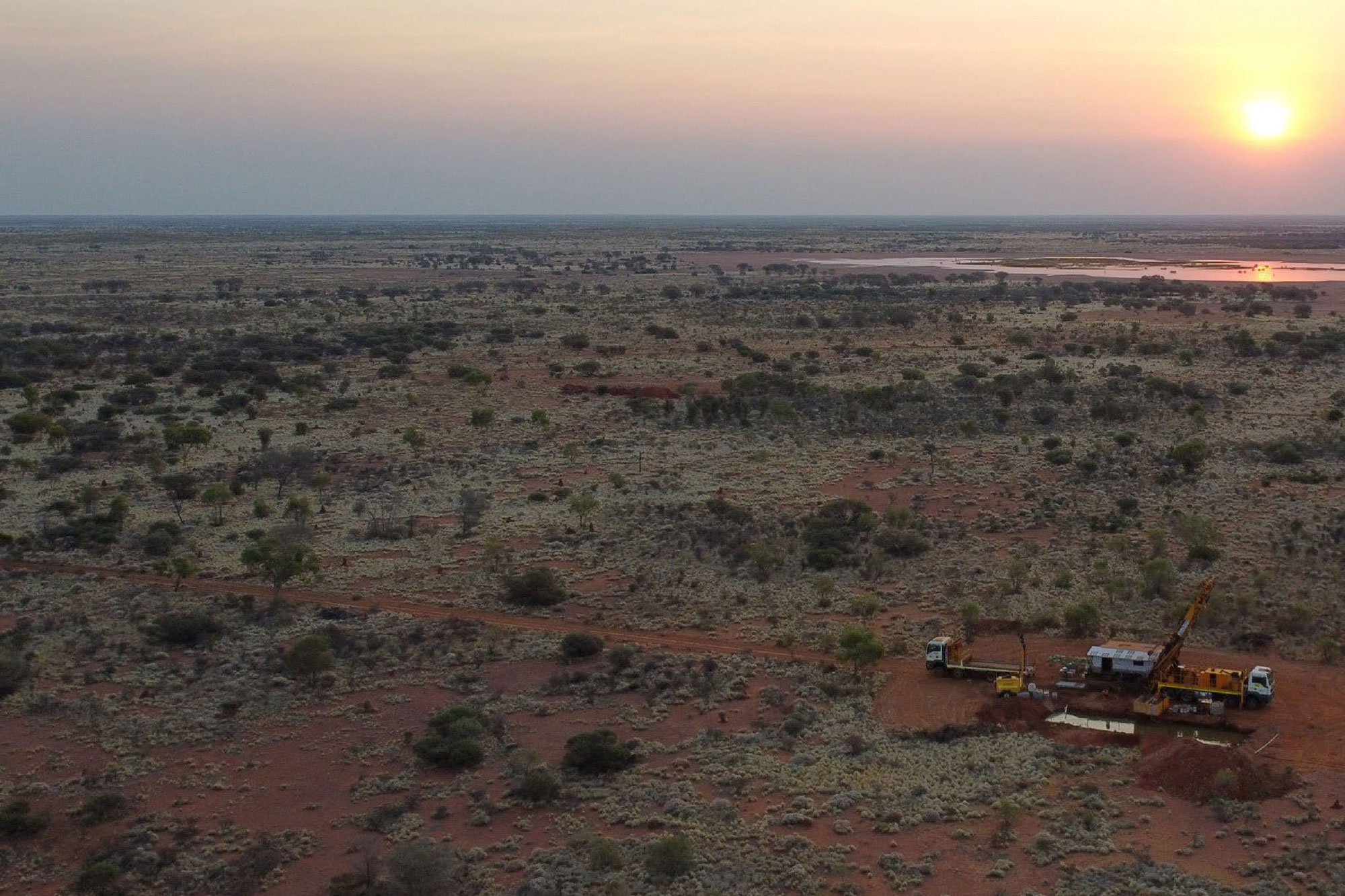
A mining site in remote WA without any site infrastructure. Source: WA1 Resources.
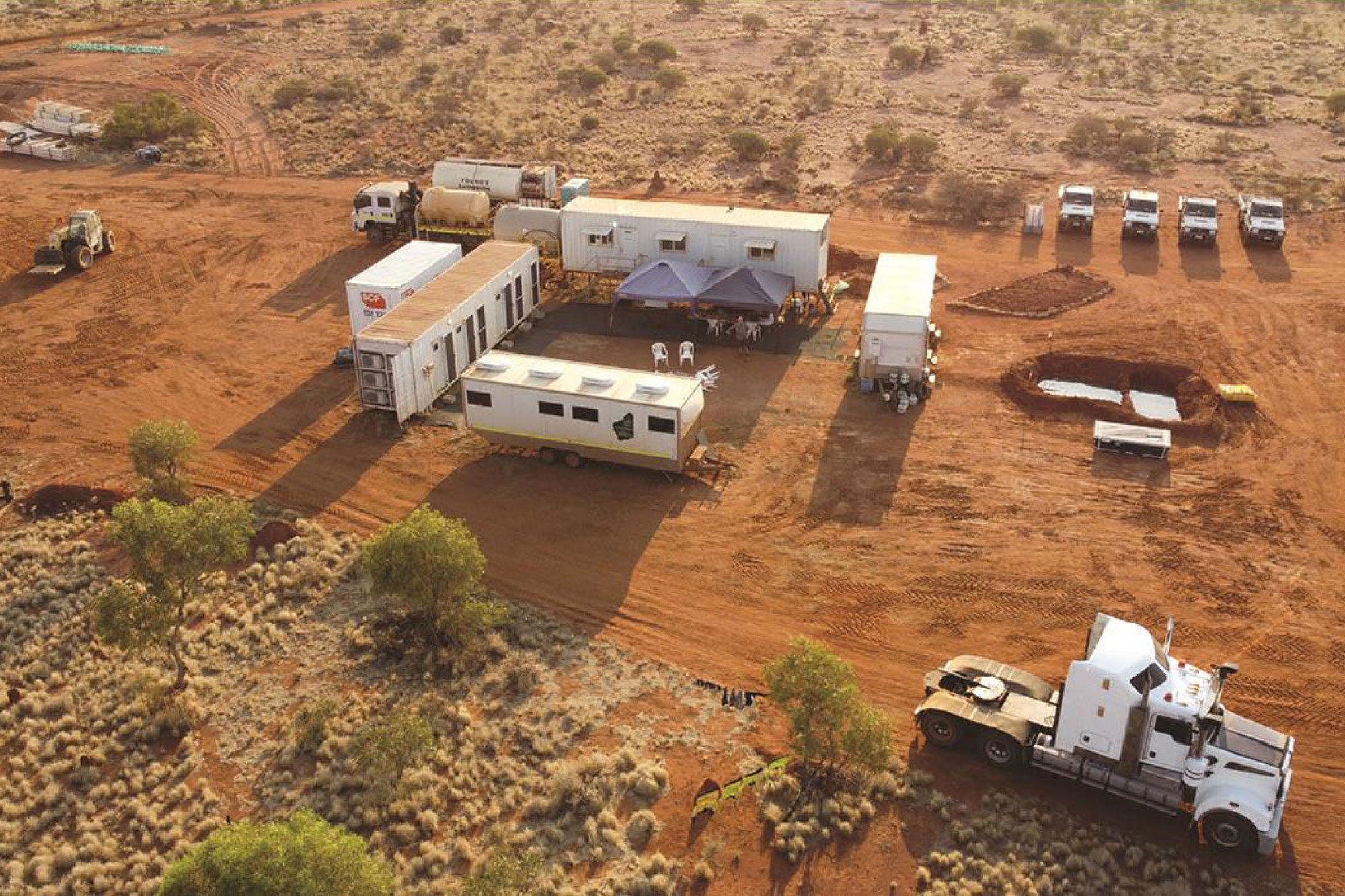
The same remote site with some site infrastructure including SCF Site Sheds. Source: WA1 Resources.
These units are specifically designed for the harsh conditions of the outback, featuring high-performance Rockwool insulation and energy-efficient air conditioning to maintain worker comfort in extreme temperatures.
The range of buildings includes everything required for a fully functional off-grid hub, from 20ft and 40ft site offices and crib rooms equipped with kitchenettes to specialized ablution blocks, first aid rooms, and accommodation units.
Like traditional shipping containers, they are built to ISO container standards so these sheds can be quickly transported via road or rail to remote basins and configured in modular layouts to maximize space, ensuring that even the most isolated project sites meet mandatory health, safety, and welfare requirements for the project team.
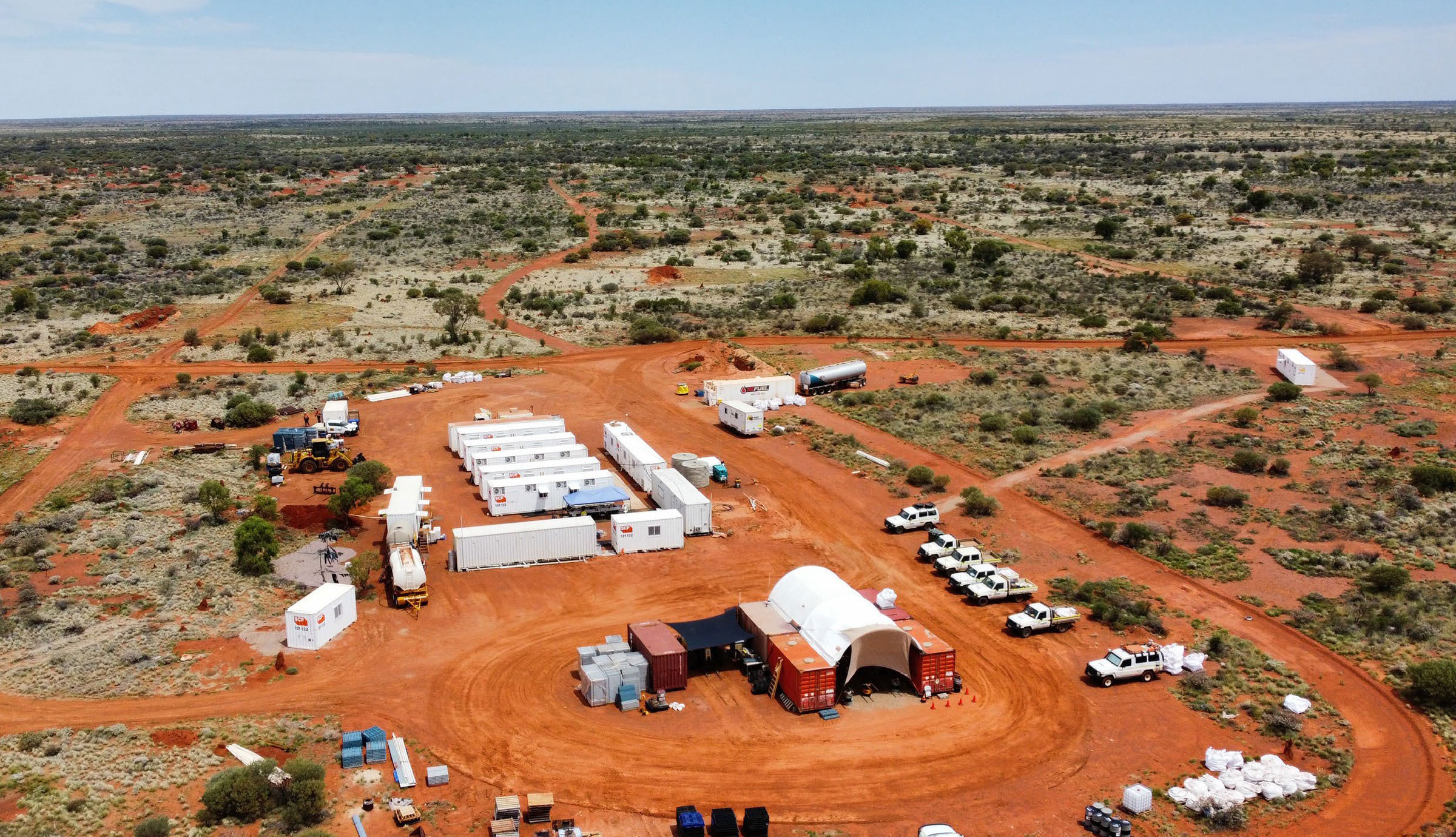
The same completed mining camp in WA with multiple SCF Site Sheds to support a FIFO team. A completed mining camp in WA with multiple SCF Site Sheds to support a FIFO team. Source: WA1 Resources.
Essential Remote Camp Requirements Provided:
Workforce Welfare: Specialized crib and lunch rooms provide dedicated, hygienic spaces for up to 10 people per unit to rest and refuel.
Hygiene and Sanitation: Ablution, shower, and ensuite blocks ensure that large crews have access to private, high-quality sanitary facilities.
Operational Hubs: Insulated site offices and container workshops provide secure, climate-controlled environments for project management and equipment maintenance.
Safety and First Aid: Dedicated portable medical buildings allow for the safe and clean treatment of patients directly on the project site.
Rapid Scalability: The ability to rent or buy units for short-term exploration or long-term production allows mining companies to scale their camp infrastructure according to project timelines.


Mining operations consume massive volumes of liquids daily, requiring secure, large-scale storage that prevents environmental contamination.
Fuel Transport and Storage: ISO Tanks can transport significant volumes of diesel and fuel oil to site via train or truck. They can also remain on site and store this as needed, providing projects with a steady stockpile of fuel.
Mobility: Wheeled Bulk Storage Tanks are utilized for fast-moving exploration programs (such as oil and gas well testing), allowing the fuel and fluid logistics to follow the path of the drilling rig.
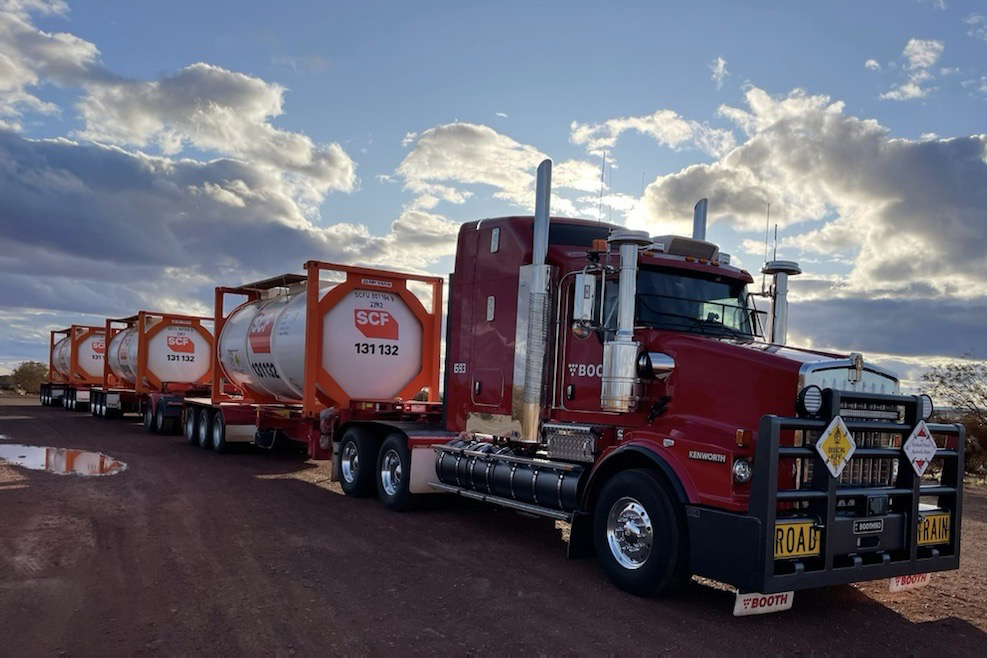
SCF ISO Tanks on a road train on the way to a project site.
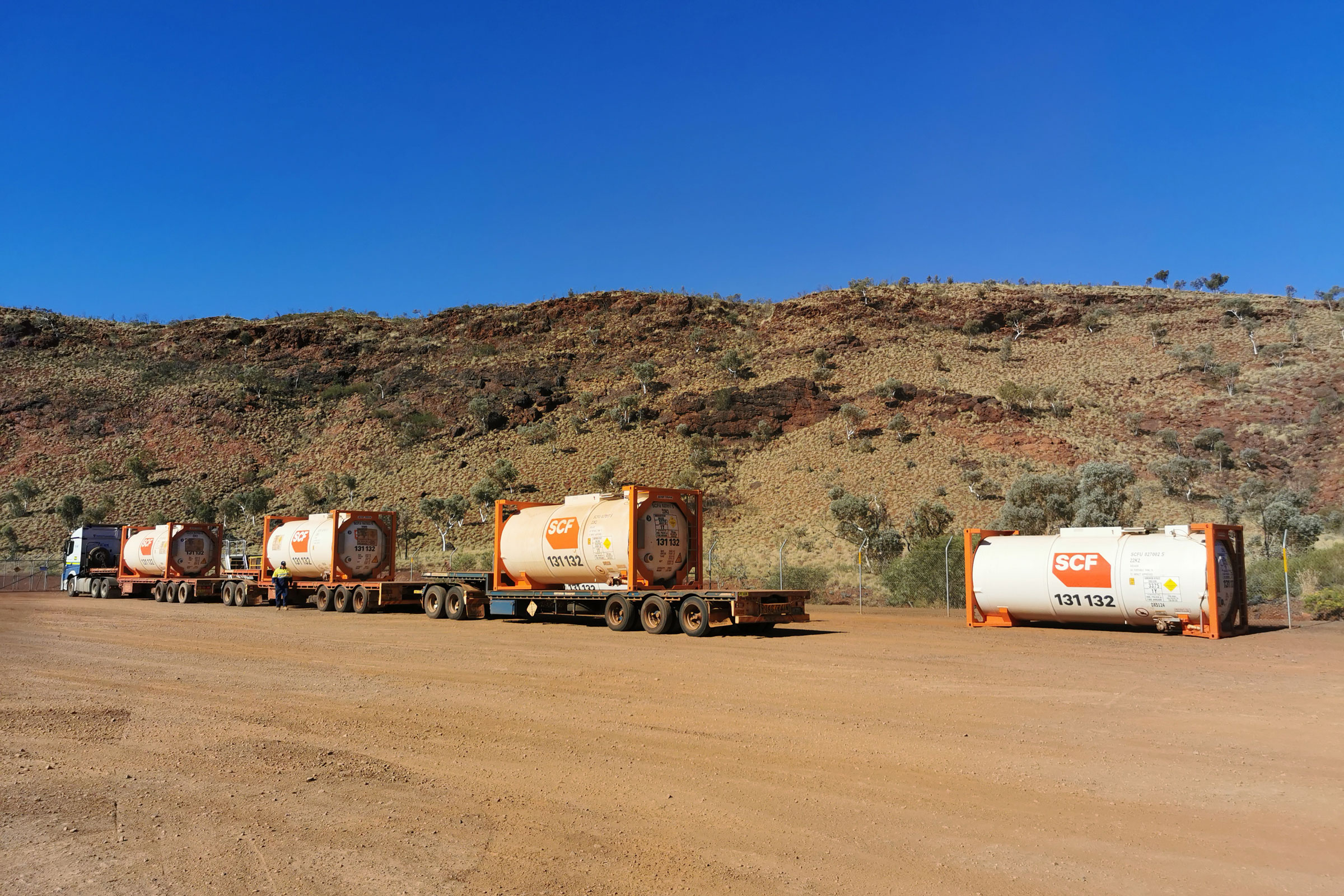
SCF ISO Tanks being delivered to a remote mining project.
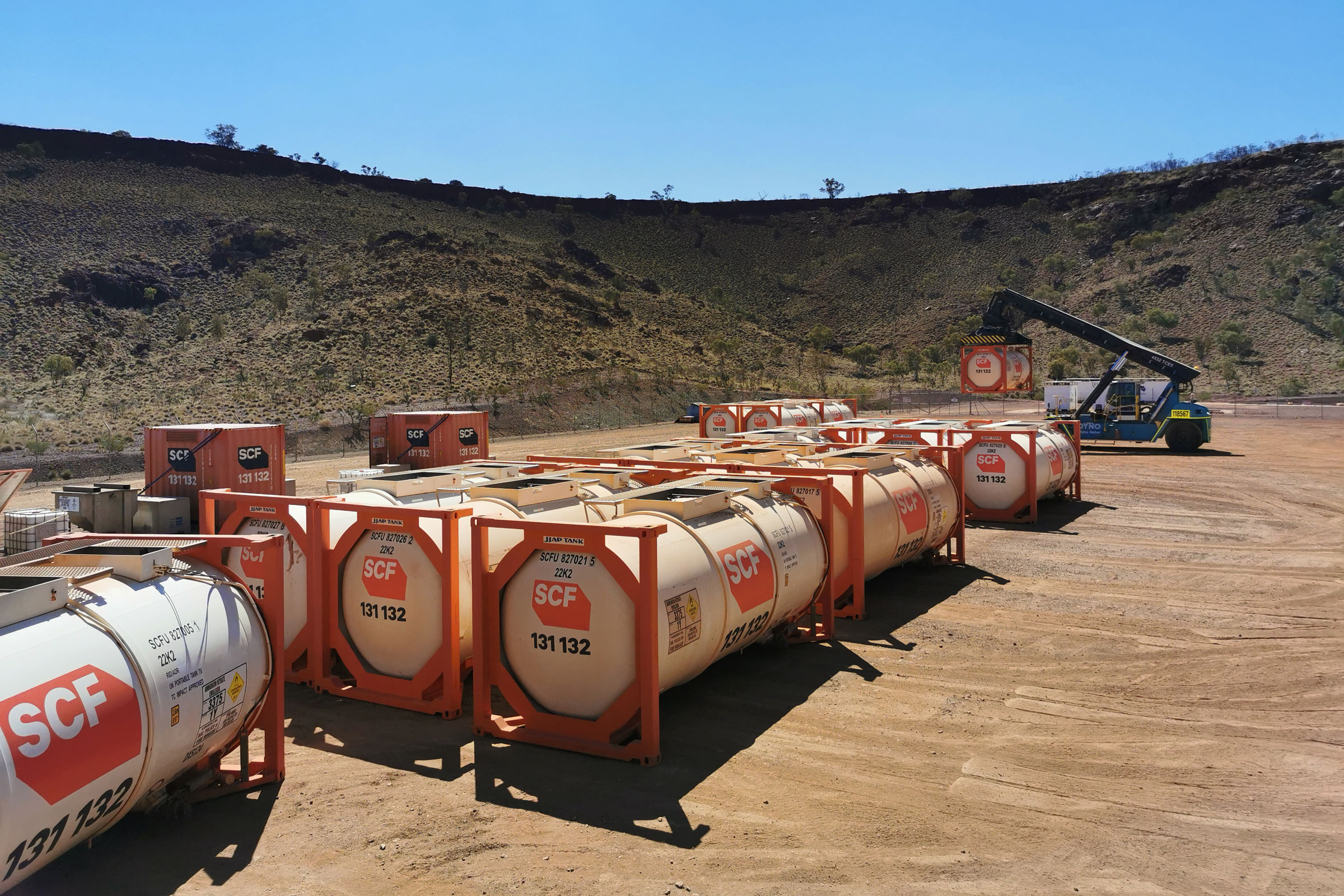
Multiple SCF ISO Tanks on a remote mining site, used for storage.
During the critical well-testing phase, managing complex fluid streams is a top priority for safety and environmental compliance.
Frac and Wheeled Tanks serve as the primary on-site interface, providing the robust capacity needed to separate and store gas-rich liquids and saline produced water. These units are engineered for rapid deployment; the wheeled variants, in particular, allow for immediate positioning and setup, ensuring that exploration programs can move from one wellhead to the next without the delays associated with permanent storage installation.
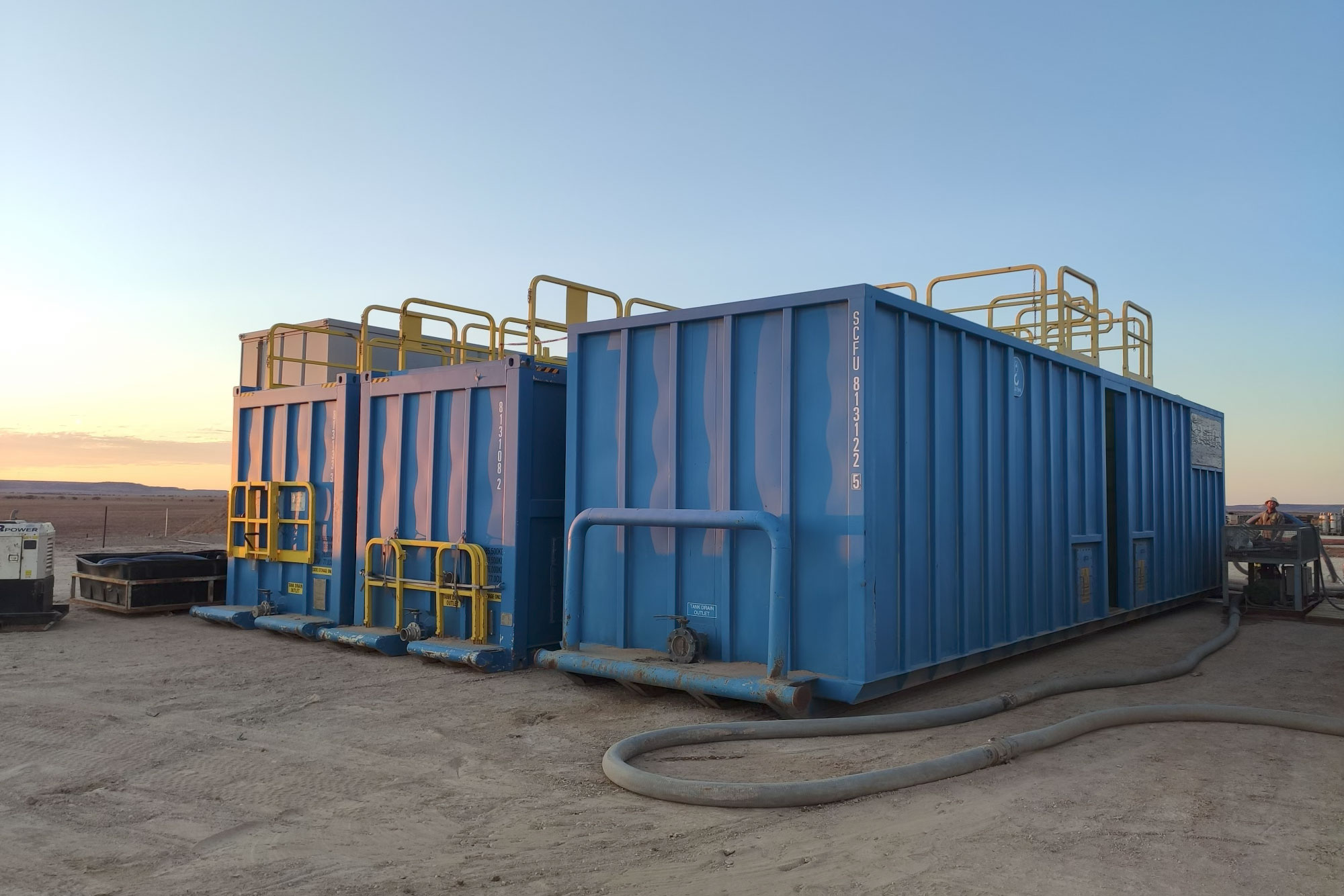
SCF BLS Tanks in a farm configuration on a drill site at sunrise
SCF's range of tanks can support the transport and storage of bulk liquids and powders on site. With the ability to transport via truck or train, this equipment can integrated into existing or new supply chains with ease.


Stricter environmental regulations, particularly regarding groundwater protection and progressive rehabilitation, require advanced on-site water treatment infrastructure.
Flowback Tanks: Rather than building permanent, expensive water treatment plants, sites deploy mobile 20ft and 40ft flowback units. Equipped with internal weirs, baffles, and sediment removal systems, these tanks clarify drilling fluids and contaminated water on-site so it can be immediately recycled for dust suppression. With additional tank equipment, sophisticated Environmental Remediation systems can be setup on site.
Sump Management: Secure, lined containment setups ensure that drilling muds and processing liquids do not leach into local water tables.
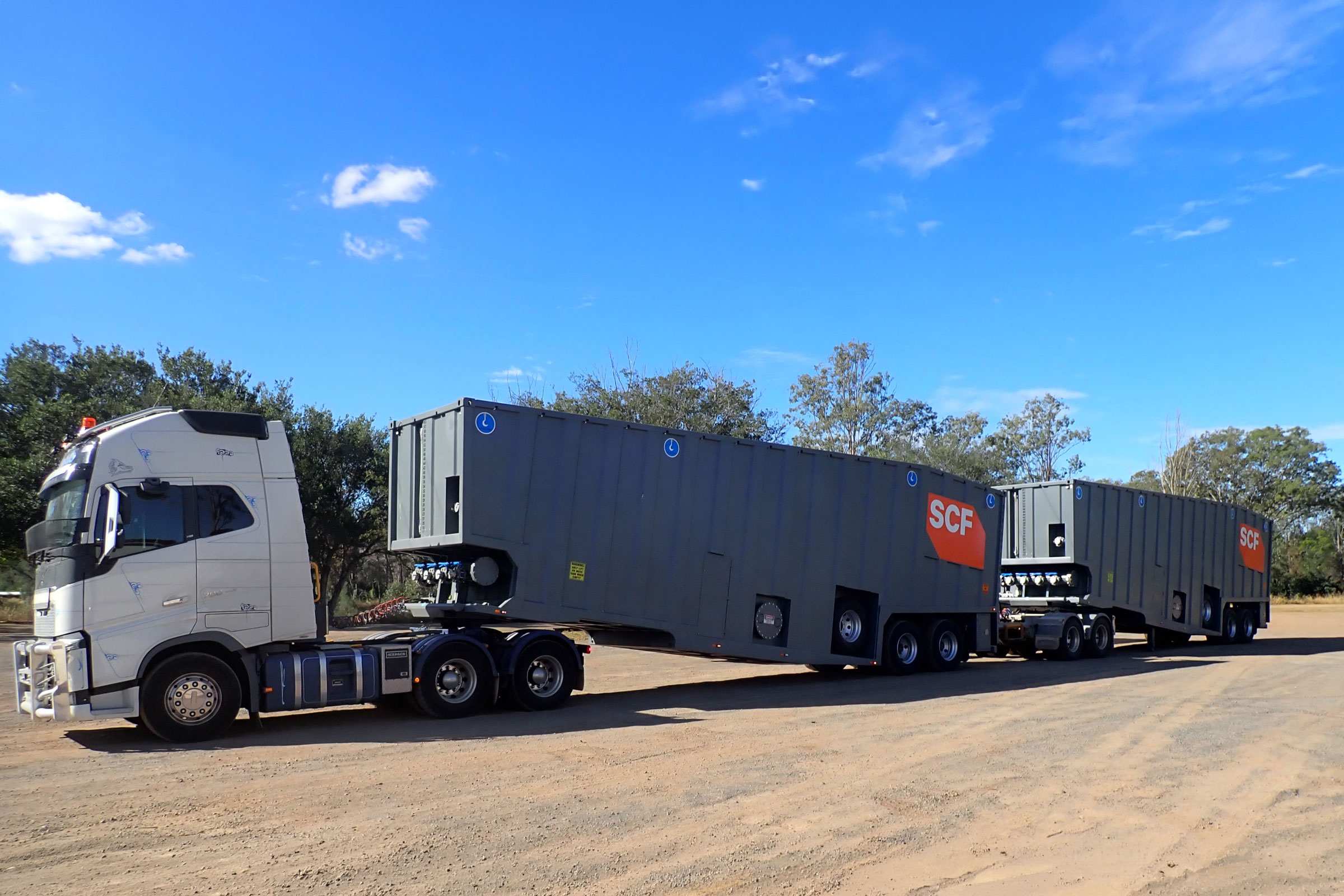
Two SCF Wheeled Bulk Liquid Tanks connected to a truck, in transit to a remote location.
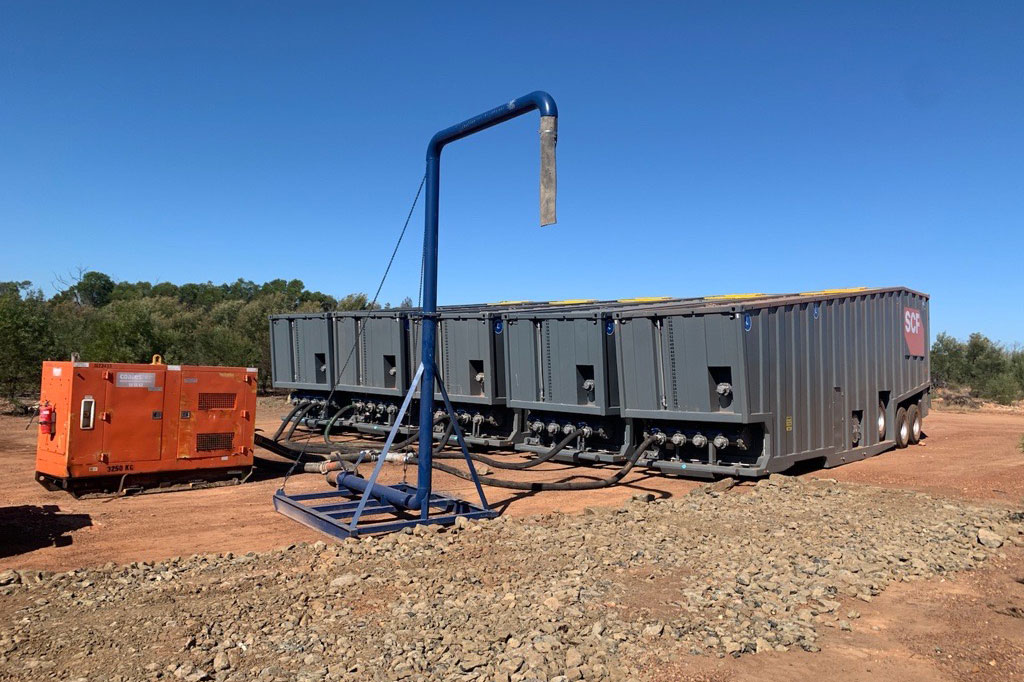
SCF BLS Wheeled Tanks in a farm configuration on a remote mining site.
SCF has a range of tanks designed for water treatment and safe storage on site. They are able to be configured into a farm to meet large needs if necessary.


Mining requires a steady input of volatile chemicals, explosives, and processing reagents (such as acids for copper recovery or cyanide for gold leaching).
Built to strict AS1940:2017 standards, these self-contained storage units feature internal liquid-tight bunding to capture spills, internal emergency escape mechanisms, and natural high/low ventilation. They allow hazardous materials to be safely stored at required separation distances from the main accommodation camps.
Able to transport and store volatile powders, such as cyanide for gold mining applications.
On remote Australian mining sites, Dangerous Goods containers act as essential, self-contained storage hubs that ensure compliance with strict AS1940 standards (The Storage and Handling of Flammable and Combustible Liquids) and state-specific WHS Mines Regulations.
These containers are engineered to safely house chemicals ranging from Class 3 flammables (like fuels and solvents) to Class 8 corrosives, which are common in mineral processing and vehicle maintenance. Key regulatory compliance is achieved through integrated safety features:


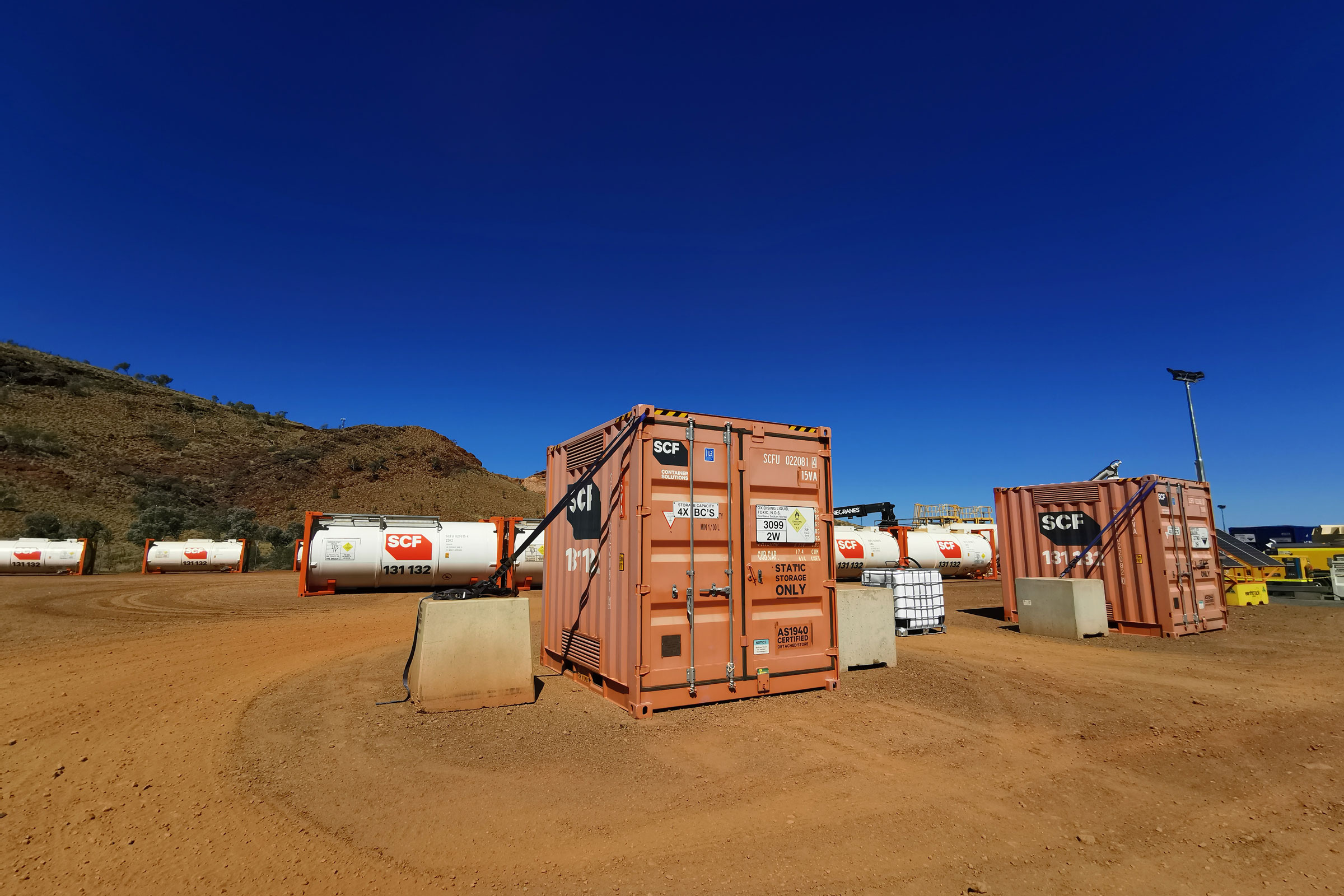
Compliance is key. Two SCF 10ft Dangerous Goods Containers provide the mine operator with a certified onsite store.
AS1940:2017 Compliance: The primary standard for storing Class 3 liquids.
Separation Distances: Ensuring the container is located a safe distance from ignition sources and site infrastructure.
Manifest & Placarding: Displaying clear hazard labels and maintaining a chemical register for emergency services.
Environmental Protection: Meeting "minor storage" or "package storage" requirements to prevent uncontrolled discharge to the environment.
SCF is a leader of Dangerous Goods storage solutions for a range of site and project types. Ensre your site is compliant and your team is safe, with the secure storage of your class 3 chemicals on site.


Establishing a smooth mining operation requires more than just static infrastructure; it demands a continuous, highly efficient supply chain to move critical parts, heavy machinery, and goods to and from the site. Intermodal Containers represent a cost effective, quick to deploy solution that can easily scale with the project throughout its life.
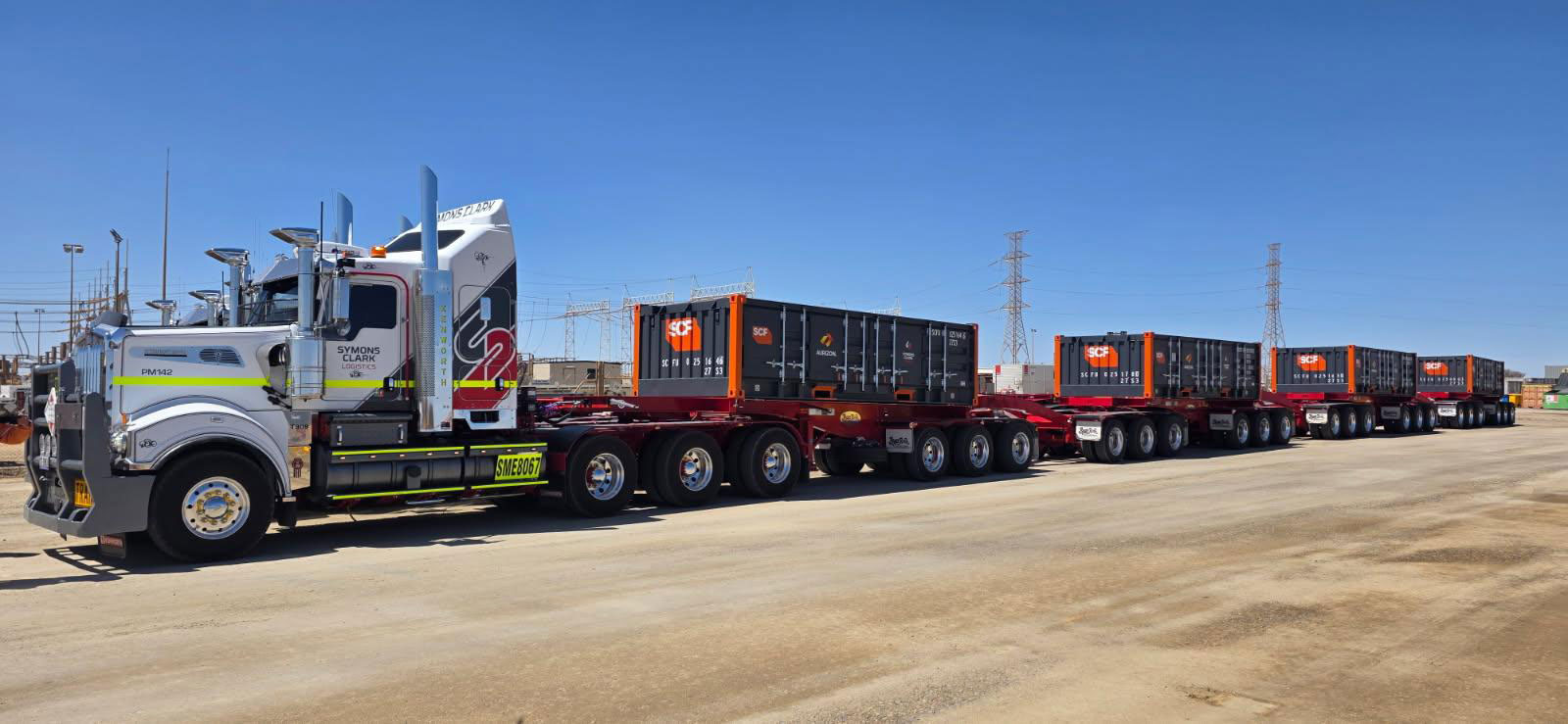
A road train with SCF intermodal containers designed to carry copper cathode
Designed specifically for Australian road and rail networks, these containers facilitate seamless, secure transport from coastal ports directly to deep interior mining basins without the need to unpack and repack cargo along the way.
To maximize freight efficiency and protect high-value mining assets in transit, operators rely on specialised intermodal containers that are proven to perform in Australia’s harsh conditions:
Traditional shipping containers are not optimized for domestic transport, but SCF's 20ft, 40ft, and 48ft Pallet Wide Containers are specifically engineered to fit two standard Australian CHEP pallets side-by-side. By utilizing internal Vertical Load Bars, operators can double-stack cargo, expanding transport capacity up to 48 pallets per trip. This is crucial for moving high volumes of uniform mining inputs, spare parts, and camp supplies cost-effectively.
Loading and unloading irregular, dense, or heavy machinery components in remote yards can be hazardous and slow. Units like the 20ft Double Side Door and 40ft Tautliner (Curtain Side) Containers allow forklift operators full access from both sides. This eliminates the "first-in, last-out" logistical headache of standard end-door containers, accelerating turnaround times on the ground.
For smaller-scale or specialized extraction projects, the 20ft Bulk Container provides a hybrid solution, allowing operations to transport bulk ore or concentrated minerals out of the site, and then utilize the same container for palletized equipment on the return journey.
Irregularly shaped mining machinery, structural steel, and heavy generators cannot fit into a standard enclosed box. Specialized Flat Rack Containers provide the heavy-duty base and reinforced tie-down points necessary to transport oversized freight securely across rugged outback corridors.
By integrating these mobile freight assets into the setup phase, mining companies ensure that the initial mobilization pipeline flows smoothly into a resilient, day-to-day operational supply chain.
SCF produces a wide range of proven intermodal containers that are proven to perform again and again in Australia's harsh environments. Transport standard palletised freight, to unusual or oversized cargo on road and rail with ease.


So now we know what to consider when setting up a mining site, let's look at some of the noteworthy Australian mining projects by size and minerals.
To be classified as a Tier Asset in the mining industry, it must satisfy the following criteria:
The project typically has a life of 20+ years.
It operates in the lowest quartile of the cost curve and is highly profitable even when commodity prices are low.
It produces significant annual revenue, typically $300-600 million.
These projects are commonly referred to as ‘company-making’, and there are roughly 15-20 current active projects that qualify as Tier 1.
The Pilbara in Western Australia has the highest cluster of Tier 1 iron ore mining assets, and is supported by dedicated heavy-haulage rail networks and private ports. Key projects include:
The world’s largest single pit iron ore mine in the world, Mount Whaleback, operated by BHP.
South Flank, one of the highest margin mines in the world due to its high grade and autonomous operations, also operated by BHP.
Gudai-Darri which features a fully autonomous truck and drill fleet with a large solar farm to reduce the carbon footprint, operated by Rio Tinto.
Roy Hill, an integrated operation that produces ~64 million tonnes per annum with exceptional profit margins, operated by Hancock Prospecting.
Iron Bridge, a high grade magnetite operation that produces 67% Fe concentrate which is essential for the ‘green steel’ transition, operated by Fortescue.
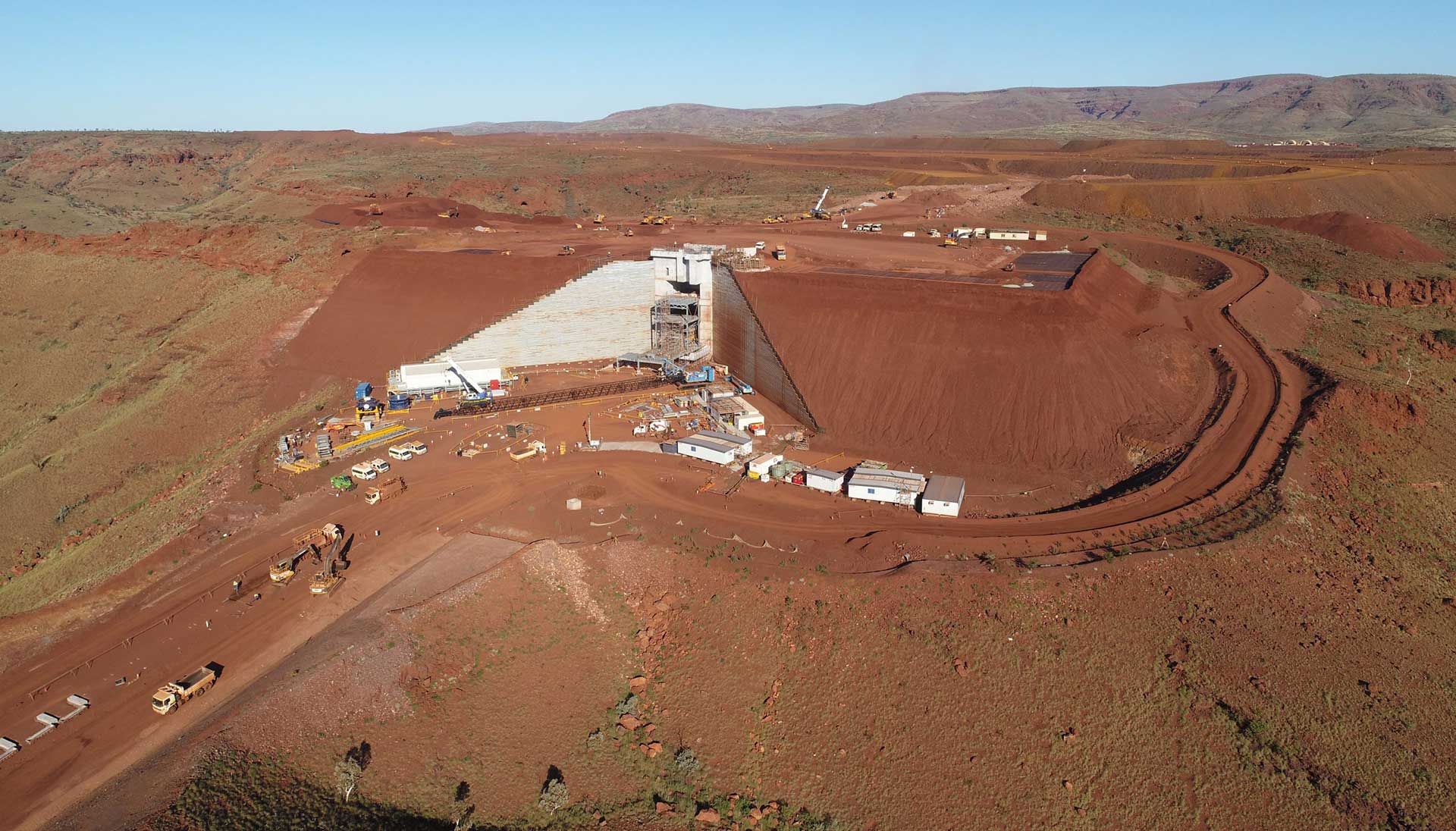
Gudai-Darri, one of Australia's Tier 1 Iron Ore Assets. Source: FSC Civils
These assets are spread across the country and are renowned for their ‘polymetallic’ nature, producing multiple valuable metals from a single ore body. Key projects include:
One of the most significant ore bodies on earth, Olympic Dam in South Australia produces copper, uranium and gold. It is operated by BHP.
Australia’s largest gold mine is Cadia Valley in New South Wales, which uses low cost ‘block caving’ methods to extract gold and copper. It is operated by Newmont.
Boddington, a significant open pit gold and copper mine in Western Australia that is recognised globally for its multi-decade reserve life, operated by Newmont.
Integrated with Olympic Dam, Prominent Hill and Carrapateena is a high grade copper and gold mine that has a massive, long-life production hub, also operated by BHP.
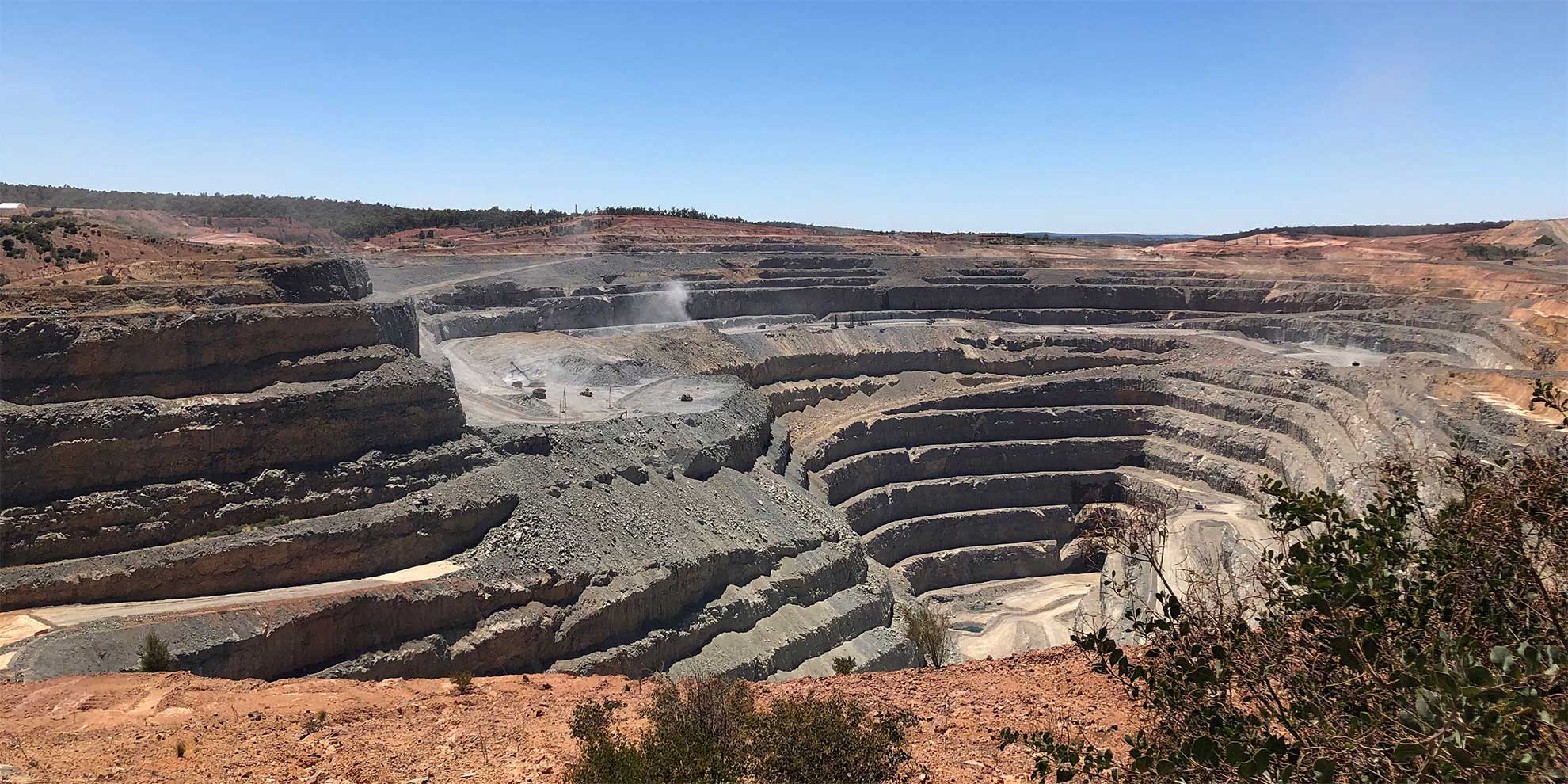
Boddington gold and copper mine in WA. Source: Perth Mint
These Tier 1 Coking Coal mines are located in Queensland. This type of coal is also known as metallurgical coal, a specific grade used primarily in the industrial process of steel manufacturing. Unlike thermal coal used for heating to generate steam for electricity, coking coal is high in carbon, porous and strong. These properties enable it to act as both a fuel and reducing agent in blast furnaces used to melt iron ore and convert it into liquid iron.
Key projects include:
Goonyella Riverside, a mine for high-quality coking coal used in global steel production, operated by BHP and Mitsubishi.
Moranbah North and Grosvenor, a highly productive underground longwall operation known for producing premium, hard coking coal.
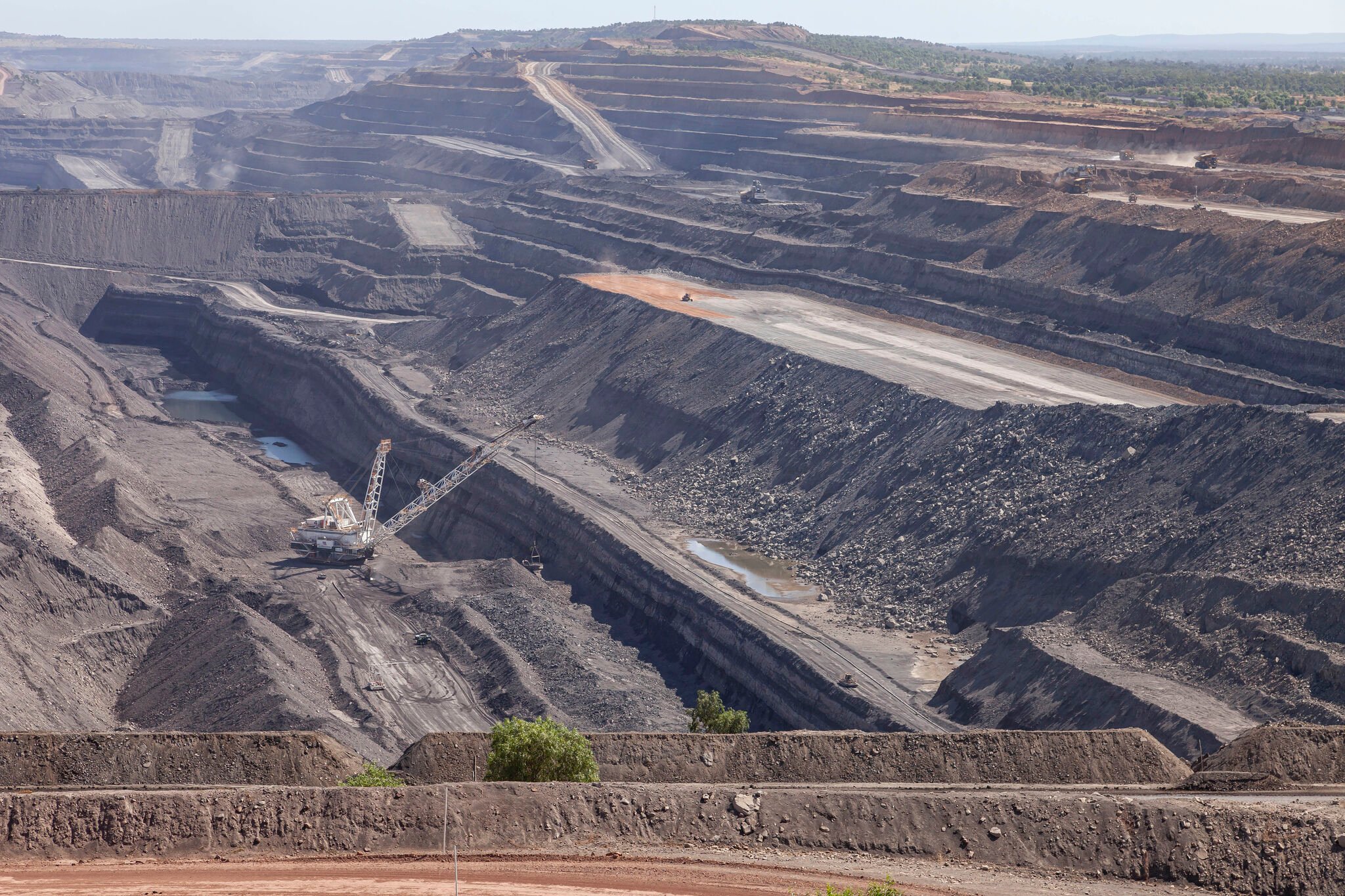
Goonyella Riverside mine. Source: BUMA Australia
With the global surge in lithium demand due to batteries and Electric Vehicles (EV), multiple lithium assets have transitioned into Tier 1 status. These are:
Greenbushes, the world’s largest and highest grade hard rock lithium mine, operated by Talison Lithium in Western Australia.
Kathleen Valley, considered Tier 1 due to its long life span (>20 years), high grade and strategic offtake agreements with major automakers, operated by Liontown Resources in Western Australia.
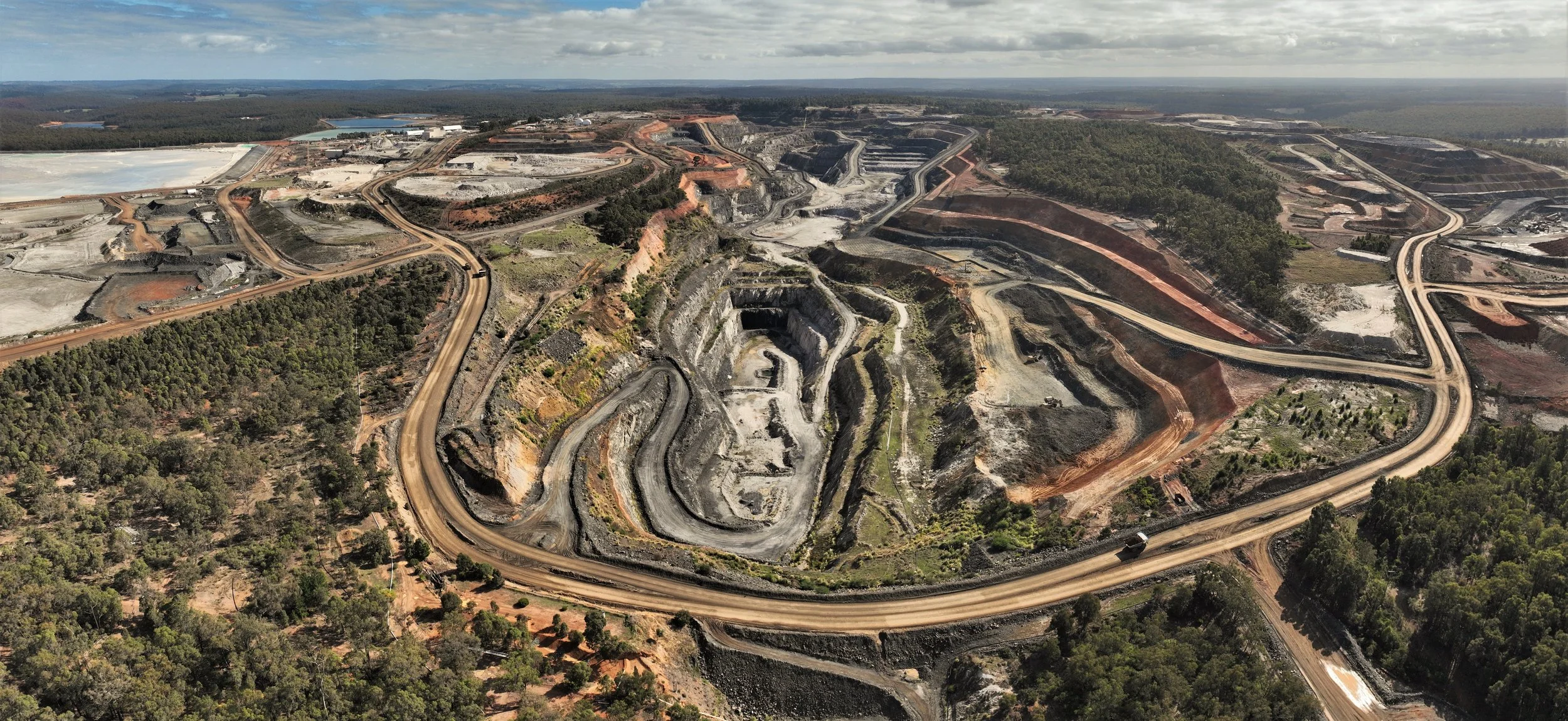
Greenbushes Lithium mine in Western Australia. Source: Talison Lithium
Tier 2 assets differ from Tier 1 in that whilst they are still high quality, significant operations, they generally have shorter life spans, higher cost, and moderate expansion potential. They are still profitable in almost all market conditions, but lack the significant scale or multi generational lifespans that characterise Tier 1.
As of 2026, there are approximately 50-60 Tier 2 Assets. These numbers can fluctuate due to a range of factors such as:
Upgrades, when Tier 3 exploration projects reach ‘Decision to Build’ and prove >10 year lifespan
Depletion, when mines near the end of life and have only 3-4 years of reserves left
Commodity prices, which can elevate or demote projects into different tiers. For example, in 2026 Copper and Rare Earth prices have pushed some projects up into Tier 2 as returns now meet the $200m valuation threshold.
The range of Tier 2 Assets account for the following commodities:
Gold - 25-30 mines
Copper and base metals - 12-15 mines
Lithium and critical minerals - 8-10 mines
Iron ore and coal - 5-8 mines
Whilst the Australian economy relies on Tier One assets, which drive significant value and investment across the country due to their low cost curve, longevity and significant revenue generation, smaller projects are just as important. With over 280 active mines, and 1,1002 projects currently in various stages of feasibility or construction, the need for purpose built equipment and quick to deploy infrastructure is critical.
A remote camp in WA was setup in a short timeframe to meet project deadlines. With the provision of multiple site sheds, the site was ready to go in no time to support the FIFO workforce.

Get in touch to discuss your needs and our experienced team can talk through all the options.